Last updated: July 10, 2026
Quick Answer: The best pizza franchise for you depends on your investment budget, experience level, and target market, but top-performing concepts share three traits: authentic product quality, strong unit economics, and comprehensive franchisee support. In 2026, pizza remains one of the most resilient segments in food service, and franchise models with proven systems consistently outperform independent operators on profitability and survival rates.
best Pizza Franchise
- Pizza is a $46 billion-plus industry in the United States, making it one of the most stable food franchise categories available to investors.
- The best pizza franchise opportunities combine authentic recipes, premium ingredients, and multiple revenue streams (dine-in, delivery, catering, ghost kitchen).
- Startup costs for pizza franchises range from roughly $150,000 for a delivery-focused model to over $500,000 for a full dine-in concept.
- Franchises with lower failure rates typically offer strong initial training, ongoing operational support, and a recognizable brand.
- Beginners with no restaurant experience can succeed in pizza franchising, provided the franchisor offers hands-on training programs.
- Authentic New York-style pizza and Philadelphia cheesesteak concepts are among the fastest-growing niches in 2026 due to consumer demand for premium, regional flavors.
- Multi-unit ownership is one of the most effective ways to scale income in pizza franchising.
- Choosing the wrong franchise is often the result of skipping due diligence on the Franchise Disclosure Document (FDD) and unit-level financials.

What Makes a Pizza Franchise Successful
A successful pizza franchise delivers consistent product quality, efficient operations, and strong brand recognition across every location. These three factors, when combined with a loyal customer base and multiple ordering channels, are what separate top-performing franchise units from struggling ones.
Specifically, the most successful pizza franchise concepts share these characteristics:
- Authentic, differentiated product: Customers have endless options. Franchises that use premium, distinctive ingredients, such as Brooklyn-made dough, Grande brand cheese, or imported Italian tomatoes, give people a reason to choose them over a generic chain.
- Operational simplicity: A streamlined menu and efficient kitchen layout reduce labor costs and training time, which directly improves margins.
- Multiple revenue streams: The best concepts generate income from dine-in, carry-out, delivery, catering, online ordering, third-party delivery platforms, and even ghost kitchen models.
- Proven systems: Franchisors that document every process, from dough handling to customer service, give franchisees a repeatable blueprint for success.
- Franchisee support: Ongoing training, marketing assistance, and supply chain management reduce the burden on individual owners.
A common mistake new investors make is evaluating a franchise purely on brand name recognition without examining unit-level economics. A well-known name does not guarantee profitability at the store level.
Top Rated Pizza Franchises in the US
The top-rated pizza franchises in the US in 2026 include both large national chains and emerging regional concepts that are gaining ground through product quality and franchisee satisfaction. The best choice depends on your investment capacity and business goals.
Large national chains like Domino’s, Pizza Hut, and Papa Johns have massive brand recognition and established supply chains. They’re reliable but require significant capital and often come with high royalty structures.
Emerging premium concepts are where much of the growth is happening right now. Authentic New York pizza and cheesesteak brands, for example, are capturing market share from consumers who want a genuine regional food experience rather than a mass-produced product.
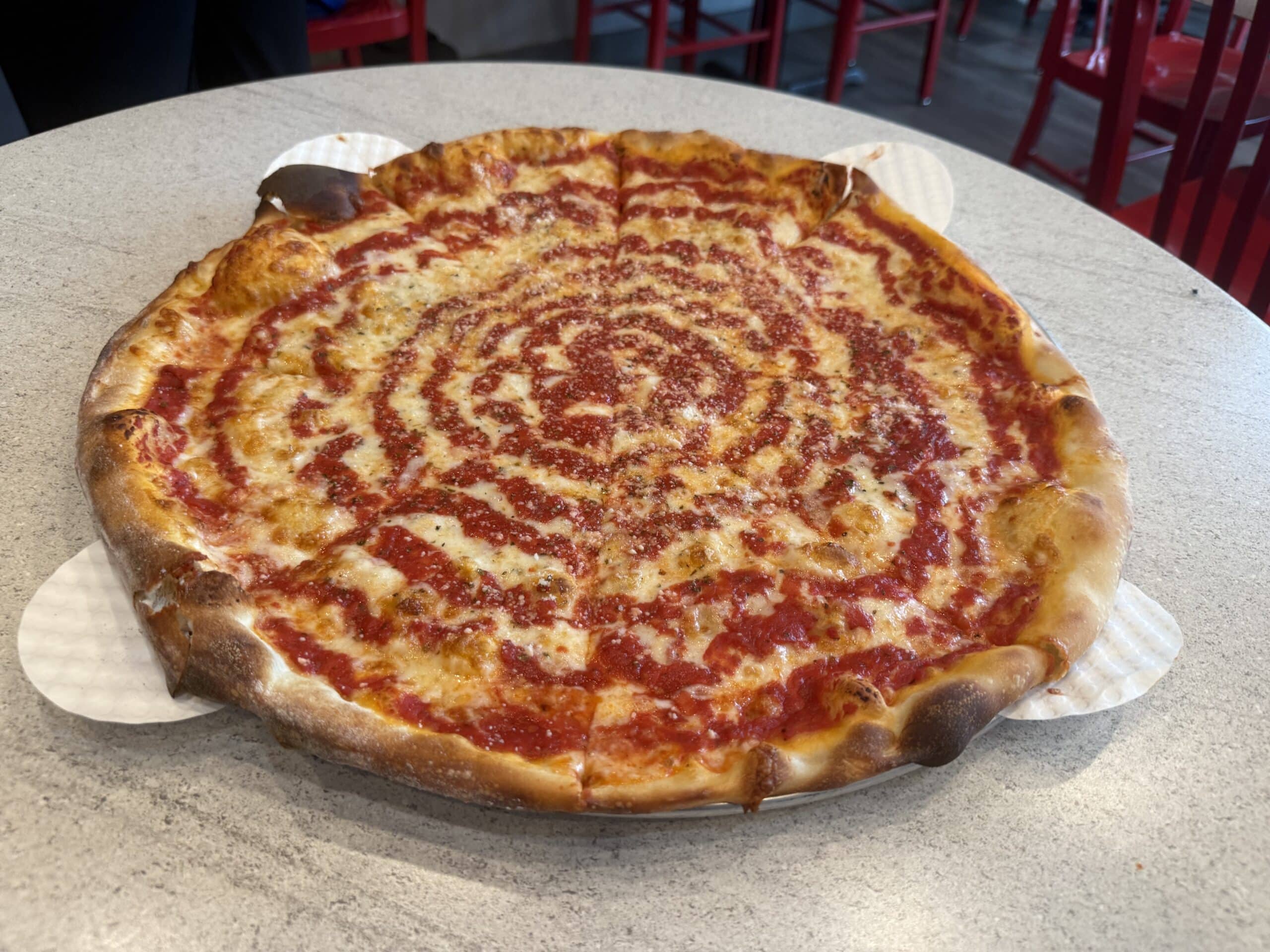
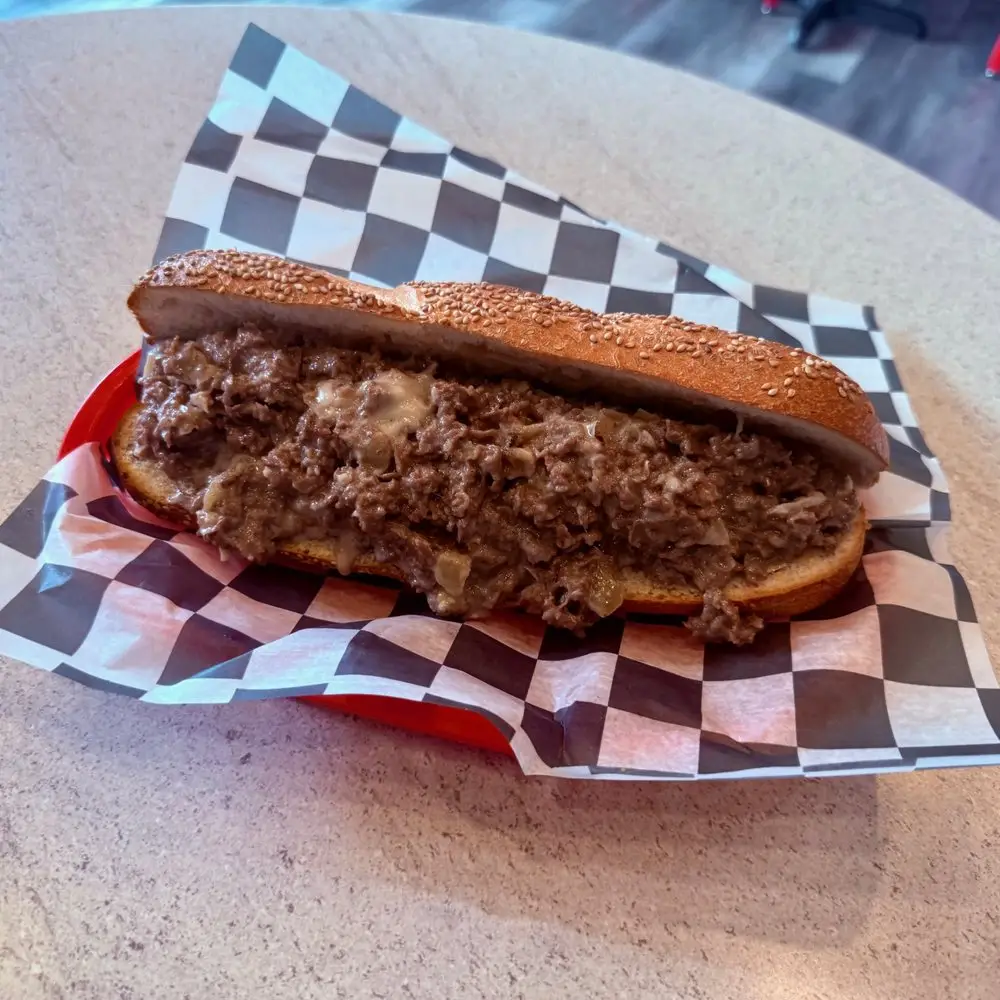
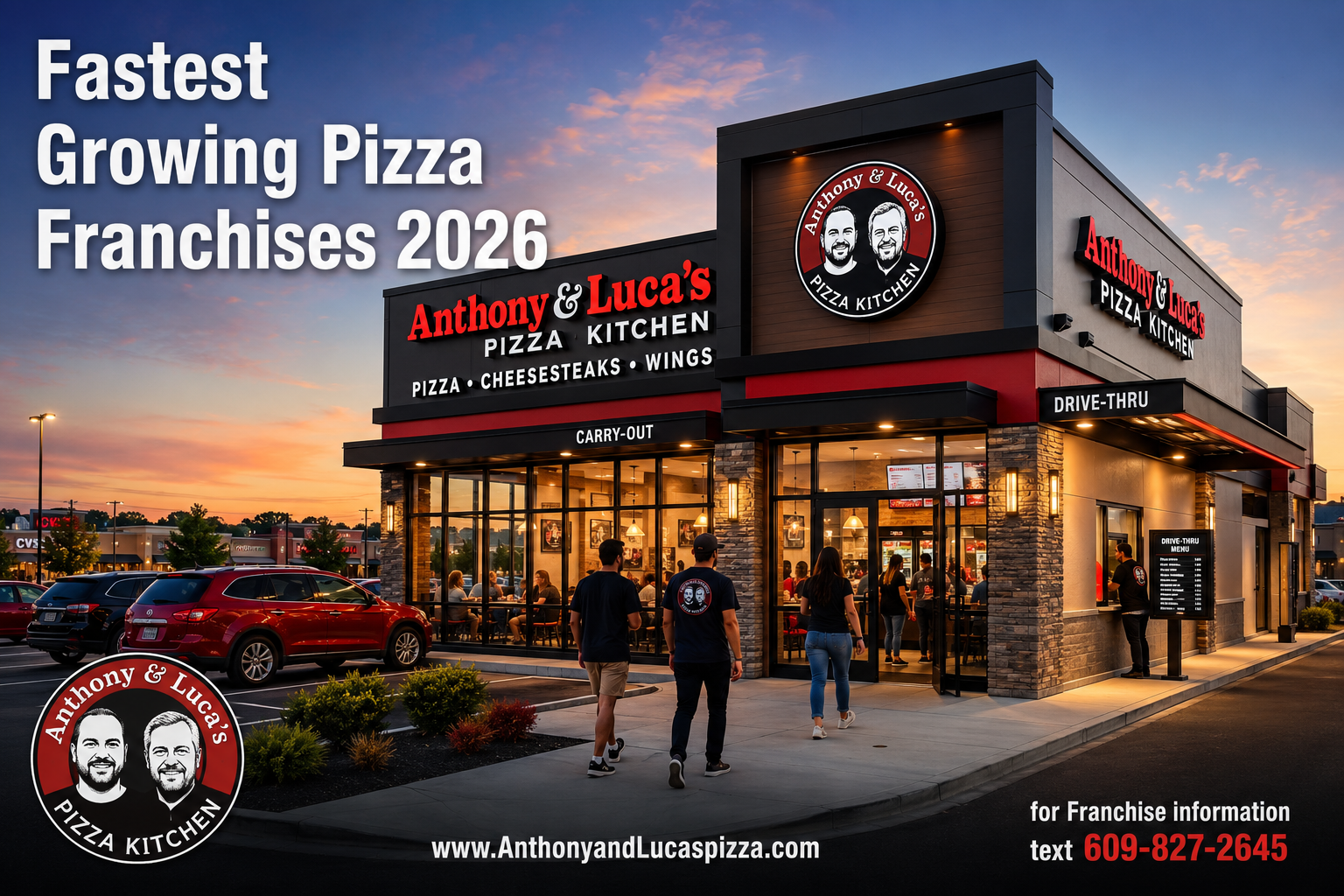
Anthony & Luca’s Pizza Kitchen stands out as one of the most compelling best pizza franchise opportunities in this emerging premium category. The brand combines:
- Authentic New York-style pizza made with dough produced in Brooklyn using real Brooklyn water
- Genuine Philadelphia cheesesteaks made with thin-sliced ribeye, Cooper Sharp American cheese, and authentic seeded Philadelphia rolls
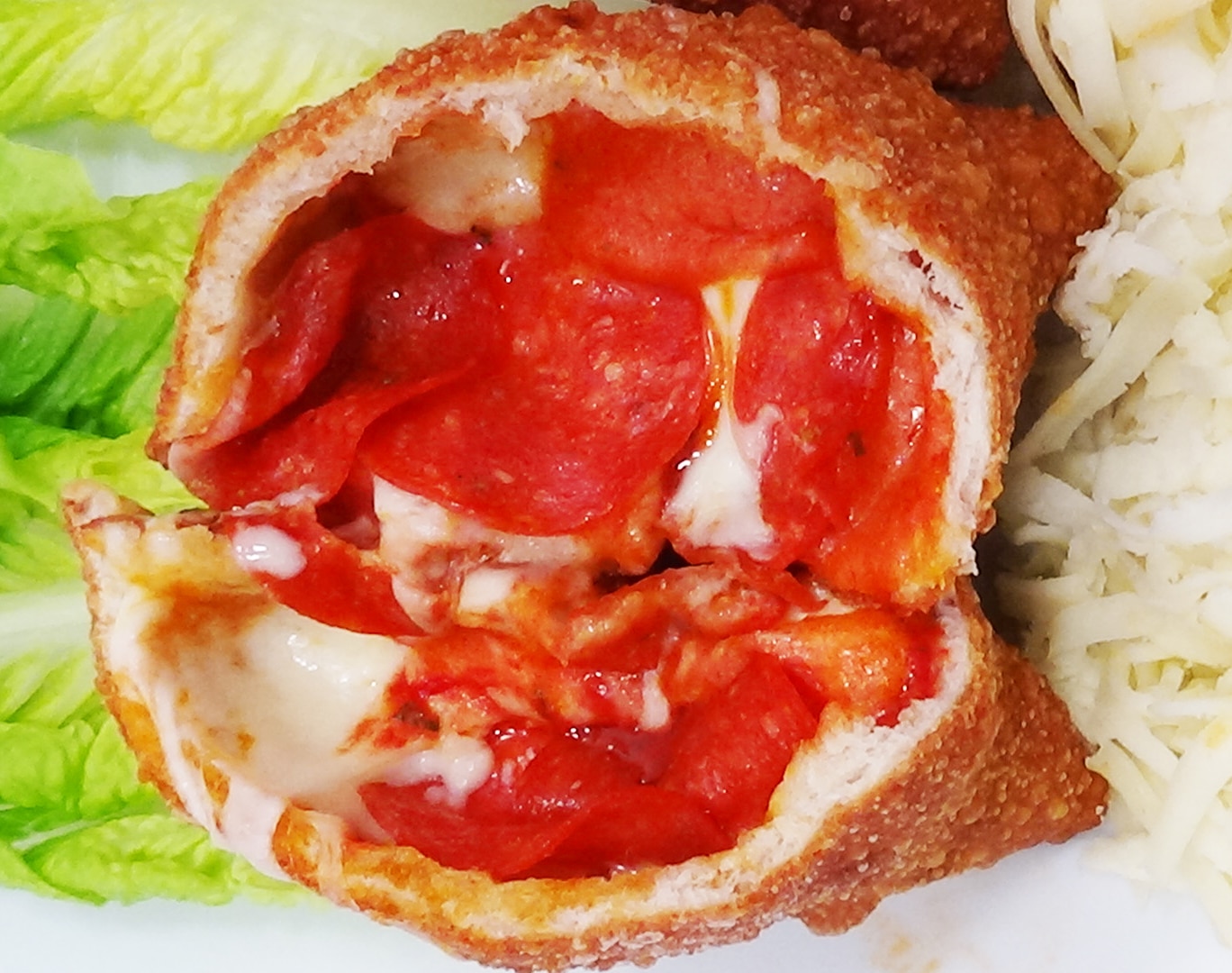
- Italian street food including original Tarantini Panzeratti (flown directly from Cherry Hill, New Jersey), arancini, stromboli, and calzones
- Chicken cutlet sandwiches with vodka sauce, buffalo style, and chicken parmesan preparations
This multi-concept approach creates higher average unit volumes than single-product pizza franchises because customers have more reasons to visit and more items to order.
Pizza Franchise vs. Independent Pizzeria: Which Is Better
For most first-time food service investors, a pizza franchise outperforms an independent pizzeria on nearly every measurable metric: survival rate, time to profitability, and access to marketing resources. Independent pizzerias offer more creative freedom but carry significantly higher risk.
Here is a direct comparison:
| Factor | Pizza Franchise | Independent Pizzeria |
|---|---|---|
| Brand recognition | Built-in from day one | Must be built from scratch |
| Training support | Structured program provided | Self-directed |
| Marketing | National and local campaigns | Owner-funded entirely |
| Supply chain | Negotiated vendor pricing | Owner negotiates alone |
| Creative control | Limited by brand standards | Complete freedom |
| Failure risk | Lower with reputable franchisor | Higher, especially in year one |
| Startup cost | Franchise fee adds to cost | No franchise fee |
Choose a franchise if you want a proven system, faster ramp-up time, and ongoing support. Choose independent if you have deep restaurant experience, a specific culinary vision, and the capital to absorb early losses.

How Much Does It Cost to Open a Pizza Franchise
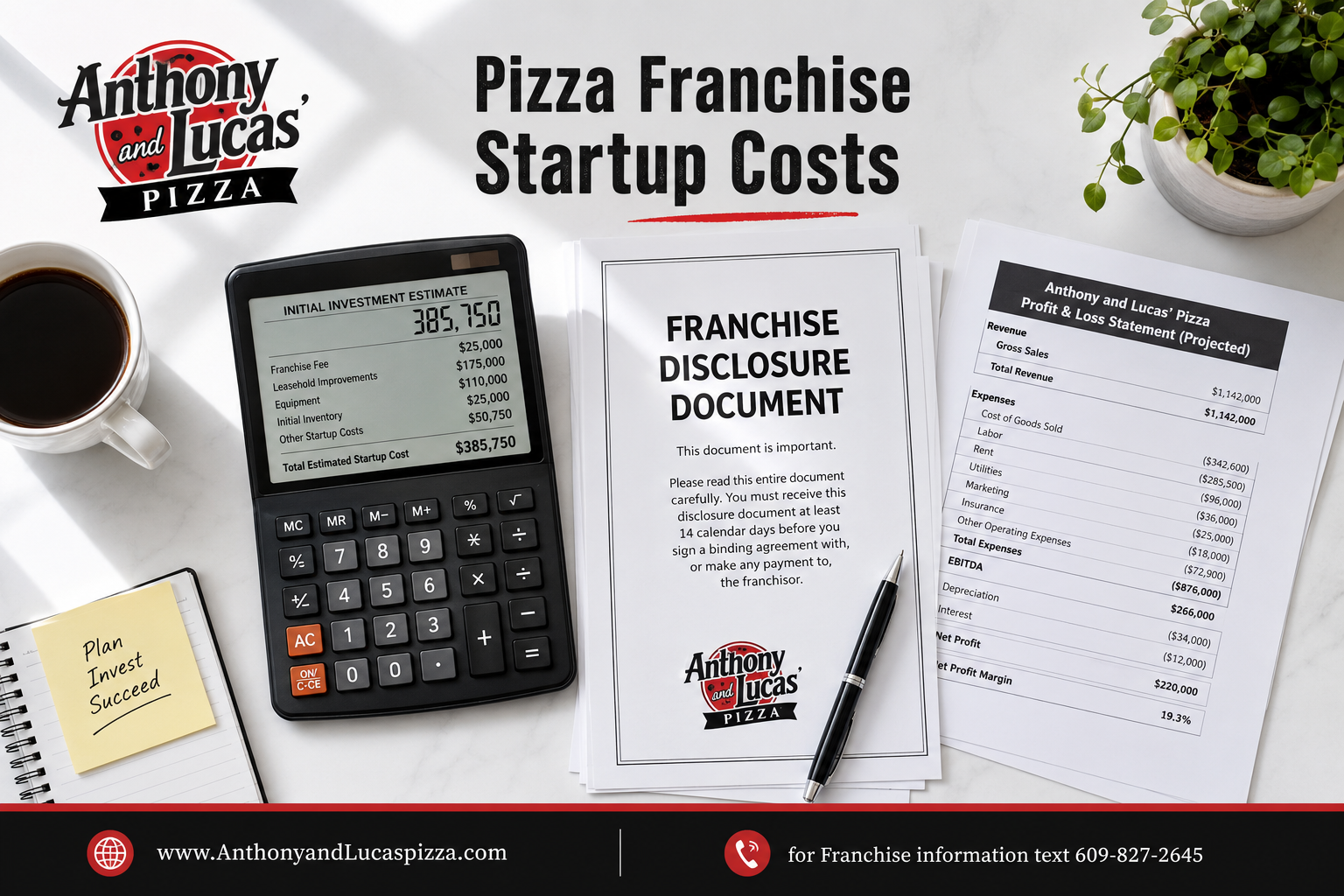
Pizza franchise startup costs vary widely based on the concept, location, and business model. Most pizza franchise investments fall between $150,000 and $600,000 total, including the franchise fee, build-out, equipment, and working capital.
Pizza Franchise Startup Costs and Fees Breakdown
Here are the typical cost categories you should budget for:
- Franchise fee: Ranges from $20,000 to $50,000 for most pizza concepts. This is a one-time fee paid to the franchisor for the right to use the brand and system.
- Build-out and leasehold improvements: $80,000 to $250,000 depending on location size and condition of the space.
- Equipment: $50,000 to $150,000 for ovens, refrigeration, prep tables, and point-of-sale systems.
- Initial inventory: $5,000 to $15,000 for opening stock.
- Working capital: $30,000 to $75,000 to cover operating expenses during the first few months before the business reaches positive cash flow.
- Royalty fees: Ongoing royalties typically range from 4% to 8% of gross sales, paid weekly or monthly.
- Marketing fund contributions: Usually 1% to 3% of gross sales, used for brand-level advertising.
Smaller footprint models, such as carry-out and delivery-focused concepts or ghost kitchen operations, can significantly reduce build-out costs. For investors looking at a pizza delivery franchise model, total startup investment can be on the lower end of that range.
Always review Item 7 of the Franchise Disclosure Document (FDD) for the franchisor’s official estimated initial investment range before committing capital.
Pizza Franchise Profitability: How Much Can You Make
Pizza franchise profitability depends on sales volume, food cost percentage, labor efficiency, and local market conditions. A well-run pizza franchise unit can generate net profit margins between 10% and 20% of gross sales, though results vary significantly by concept and operator.
Key financial benchmarks to evaluate:
- Average Unit Volume (AUV): This is the average annual gross sales per location. Higher AUV concepts give franchisees more revenue to work with after paying royalties and operating costs.
- Food cost percentage: Premium ingredient concepts typically run food costs between 28% and 35%. Efficient purchasing and minimal waste are critical.
- Labor cost percentage: Efficient pizza concepts target 25% to 32% of sales in labor.
- EBITDA margin: After all operating expenses, royalties, and marketing contributions, a healthy franchise unit should show EBITDA margins of 12% to 20%.
Concepts that offer multiple revenue streams, including dine-in, carry-out, delivery, catering, and third-party platforms, consistently achieve higher AUVs than single-channel operators. Multi-unit ownership amplifies these returns because fixed costs like management overhead are spread across more locations.
How Do I Choose the Right Pizza Franchise to Invest In
Choosing the right pizza franchise comes down to five factors: product authenticity, brand differentiation, financial transparency, franchisor support quality, and market fit. Skipping any of these in your due diligence is the most common reason investors regret their franchise choice.
Follow this evaluation process:
- Request and read the FDD carefully. The Franchise Disclosure Document contains 23 items covering fees, litigation history, franchisee obligations, and financial performance representations. Pay close attention to Item 19 (financial performance) and Item 21 (audited financials).
- Talk to existing franchisees. Item 20 of the FDD lists current and former franchisees. Call at least 10 of them and ask about support quality, realistic earnings, and whether they would invest again.
- Evaluate the product honestly. Visit multiple locations as a customer. If the product is not genuinely better than what’s available locally, customer retention will be weak.
- Assess the territory. Understand the population density, competition, and demographic fit for the concept in your target market.
- Review the support structure. Ask specifically about initial training length, ongoing field support visits, marketing assistance, and technology platforms.
For investors interested in a New York pizza franchise model, the key differentiator to look for is ingredient authenticity. Concepts that use genuine Brooklyn-made dough, real imported tomatoes, and Grande cheese produce a measurably different product than competitors using commodity ingredients.
What Pizza Franchises Have the Lowest Failure Rate
Pizza franchises with the lowest failure rates are those that combine strong brand recognition, comprehensive training programs, ongoing operational support, and realistic financial expectations set during the discovery process. Failure is most often linked to undercapitalization and lack of franchisor support, not market demand.
Factors that correlate with lower failure rates:
- Franchisors with 10-plus years of operating history have refined their systems and weathered economic cycles.
- Concepts with high franchisee satisfaction scores (measured by independent surveys) indicate that the franchisor delivers on its promises.
- Brands with multiple revenue channels are more resilient because a slowdown in one channel (e.g., dine-in during a slow economy) is offset by others (delivery, catering).
- Adequate working capital requirements enforced by the franchisor reduce the risk of franchisees running out of cash before reaching profitability.
A pizza kitchen franchise model that includes both pizza and complementary products like cheesesteaks and Italian street food has a structural advantage: a broader menu attracts a wider customer base and drives higher per-visit spending.
Pizza Franchise Requirements and Qualifications
Most pizza franchisors require franchisees to meet minimum net worth and liquid capital thresholds, pass a background check, and complete a formal application and discovery process. Restaurant experience is helpful but not always required.
Typical requirements include:
- Net worth: $300,000 to $500,000 minimum for most mid-tier concepts
- Liquid capital: $100,000 to $200,000 readily available (not tied up in retirement accounts or real estate)
- Credit history: Clean credit with no recent bankruptcies
- Background check: Standard for all franchise systems
- Commitment to the brand: Most franchisors want owner-operators, at least for the first location
Some franchisors also require franchisees to complete a multi-week training program at a corporate training location before opening. This is a sign of a well-organized system, not a burden.
Best Pizza Franchises for Beginners With No Experience
The best pizza franchise for beginners is one with a structured training program, simple operations, and a dedicated support team that stays engaged after opening day. No restaurant experience is required for many franchise systems, provided the franchisee is willing to follow the system.
What to look for as a first-time franchisee:
- Training duration of at least two to four weeks covering both kitchen operations and business management
- A dedicated franchise support representative assigned to your territory
- Simplified menu and kitchen design that reduces complexity and speeds up staff training
- Technology platforms for point-of-sale, inventory management, and online ordering that are already integrated and tested
Anthony & Luca’s Pizza Kitchen, for example, is designed with operational simplicity in mind. The kitchen systems, supplier relationships, and marketing tools are already built. A new franchisee does not need to figure out where to source Brooklyn dough or how to set up third-party delivery integrations because those systems are already in place.
For beginners evaluating entry points, exploring a pizza franchise opportunity with a smaller footprint and carry-out focus is often the smartest first step before scaling to a full dine-in location.
Pizza Franchise Support and Training: What to Expect
A quality pizza franchisor provides initial training, ongoing field support, marketing assistance, and technology tools as part of the franchise relationship. Weak support is the single biggest complaint among dissatisfied franchisees, so evaluating this before signing is critical.
Expect the following from a well-structured franchise system:
- Initial training: Two to six weeks at a corporate training facility or flagship location covering food preparation, kitchen operations, customer service, and business management
- Pre-opening support: Site selection assistance, lease negotiation guidance, build-out oversight, and grand opening planning
- Ongoing field visits: A franchise business consultant should visit your location regularly, at least quarterly, to review operations and identify improvement opportunities
- Marketing support: Access to brand-level advertising campaigns, social media templates, local store marketing tools, and promotional materials
- Technology platform: Integrated POS, online ordering, loyalty program, and reporting dashboard
Ask every franchisor you evaluate: “How many franchisees does each support representative manage?” A ratio above 30 to 1 suggests the support team is stretched thin.
Common Mistakes People Make Buying a Pizza Franchise
The most common mistake is choosing a franchise based on brand familiarity rather than unit-level financial performance. Other frequent errors include underestimating working capital needs, skipping franchisee reference calls, and selecting a territory without proper demographic research.
Avoid these specific pitfalls:
- Not reading the FDD thoroughly. The FDD contains everything you need to make an informed decision. Hire a franchise attorney to review it with you.
- Underestimating total startup costs. Always budget 15% to 20% above the franchisor’s estimated range for unexpected build-out costs and slower-than-projected ramp-up.
- Choosing location based on personal preference. Your favorite neighborhood may not have the traffic patterns, demographics, or competition profile to support a successful unit.
- Ignoring the royalty structure. A 1% difference in royalty rate on $800,000 in annual sales is $8,000 per year. Over a 10-year term, that is $80,000.
- Failing to plan for multi-unit growth. The most successful pizza franchisees plan for two or three locations from the start. Single-unit ownership limits your income ceiling.
Fastest Growing Pizza Franchises Right Now
In 2026, the fastest-growing pizza franchise segments are premium authentic concepts, fast-casual New York-style brands, and hybrid pizza-plus-cheesesteak models. These categories are growing because consumers are trading up from commodity chains to brands that offer a genuinely better product.
Several trends are driving this growth:
- Demand for regional authenticity: Consumers increasingly seek out New York-style pizza and Philadelphia cheesesteaks rather than generic fast-food versions.
- Ghost kitchen and delivery expansion: Lower-cost entry models are allowing new franchise units to open faster and in non-traditional locations.
- Multi-revenue stream resilience: Brands that combine dine-in, carry-out, delivery, and catering are outperforming single-channel operators.
- Premium ingredient positioning: Franchises using Grande cheese, imported tomatoes, and Brooklyn-made dough command higher price points and stronger customer loyalty.
The hottest pizza franchise concepts right now are those that can deliver a restaurant-quality product at fast-casual speed, across multiple ordering channels.

Pizza Franchise vs. Other Food Franchises: How Does It Compare
Pizza franchises generally offer better unit economics than most other food franchise categories because of high product margins, strong repeat purchase frequency, and broad consumer appeal. Compared to burger, sandwich, or Mexican food franchises, pizza has lower food cost percentages and higher average ticket sizes.
Key comparisons:
- Pizza vs. burger franchises: Pizza typically has lower food cost (28-33% vs. 30-36% for burgers) and higher average ticket. Burger concepts often require larger real estate footprints.
- Pizza vs. sandwich franchises: Pizza has stronger delivery revenue potential. Sandwich franchises often compete heavily on price, compressing margins.
- Pizza vs. Mexican food franchises: Both perform well, but pizza has broader demographic appeal and stronger delivery penetration.
- Pizza vs. cheesesteak franchises: Combining both in one concept, as Anthony & Luca’s does, creates a dual-revenue model that outperforms either category alone.
For investors comparing food franchise categories, pizza consistently ranks among the top performers for return on investment, customer frequency, and brand longevity. Exploring a new pizza franchise opportunity in the premium segment offers even stronger differentiation in competitive markets.
FAQ
What is the best pizza franchise to own in 2026?
The best pizza franchise depends on your budget and goals, but premium authentic concepts combining New York-style pizza with complementary products like cheesesteaks consistently show stronger unit economics and customer loyalty than commodity chains.
How much money do I need to open a pizza franchise?
Most pizza franchises require total startup investment between $150,000 and $600,000, including the franchise fee, build-out, equipment, and working capital. Smaller delivery-focused models can be opened for less.
Do I need restaurant experience to buy a pizza franchise?
No. Many pizza franchisors accept first-time operators and provide comprehensive training programs. The key is choosing a franchise with strong initial training and ongoing support.
What is the average profit margin for a pizza franchise?
Well-run pizza franchise units typically achieve net profit margins between 10% and 20% of gross sales, depending on sales volume, labor efficiency, and local market conditions.
How long does it take to open a pizza franchise after signing?
From signing the franchise agreement to opening day, most pizza franchises take four to nine months, depending on lease negotiation, build-out complexity, and training completion.
What is a Franchise Disclosure Document (FDD)?
An FDD is a legal document that franchisors are required to provide to prospective franchisees. It contains 23 items covering fees, obligations, financial performance, and litigation history. Always review it with a franchise attorney.
What makes Anthony & Luca’s Pizza Kitchen different from other pizza franchises?
Anthony & Luca’s uses Brooklyn-made dough with authentic Brooklyn water, Grande brand cheese, imported Italian tomatoes, and genuine Philadelphia cheesesteak ingredients including Cooper Sharp American cheese and authentic seeded rolls. This level of ingredient authenticity is rare in franchise pizza.
Can I own multiple pizza franchise locations?
Yes. Multi-unit ownership is encouraged by most franchisors and is one of the most effective ways to scale income. Many franchisees negotiate area development agreements that give them the right to open multiple units in a defined territory.
What is a ghost kitchen pizza franchise?
A ghost kitchen is a delivery-only kitchen with no dine-in space. Some pizza franchises offer ghost kitchen models that reduce startup costs and allow franchisees to enter new markets with lower overhead.
How do I start the process of buying a pizza franchise?
Start by requesting the FDD from franchisors you are interested in, reviewing it with a franchise attorney, speaking with existing franchisees, and visiting operating locations. Then submit a formal application and complete the franchisor’s discovery process.
Conclusion
The best pizza franchise in 2026 is not simply the one with the most locations or the biggest advertising budget. It is the one that delivers a genuinely better product, supports its franchisees with real operational systems, and creates multiple ways for customers to spend money. Those fundamentals drive unit-level profitability, which is the only metric that matters to you as an investor.
Actionable next steps:
- Define your investment budget and liquid capital before approaching any franchisor.
- Request FDDs from two to three pizza franchise concepts that match your investment range and product preferences.
- Hire a franchise attorney to review the FDD before signing anything.
- Call at least 10 existing franchisees from each system and ask specific questions about support quality and realistic earnings.
- Visit operating locations as a customer and evaluate the product honestly.
- Explore the Anthony & Luca’s pizza franchise opportunity if you are looking for a premium authentic concept with multiple revenue streams and genuine product differentiation.
The pizza industry rewards operators who take the time to choose the right system and execute it consistently. Do the due diligence, pick a brand you believe in, and build from there.