Last updated: July 10, 2026
Quick Answer: A cheesesteak franchise opportunity lets you open a branded cheesesteak restaurant using a proven system, established recipes, and franchisor support in exchange for an initial fee and ongoing royalties. Total startup investment typically ranges from $150,000 to $500,000 depending on the brand, location, and business model. For the right candidate, it offers a faster path to profitability than building an independent restaurant from scratch.
Cheesesteak Franchise Opportunity
- Cheesesteak franchises combine a beloved American comfort food with the structural support of a franchise system, lowering the risk compared to independent restaurant ownership.
- Total investment costs vary widely: expect $150,000 to $500,000 for a full brick-and-mortar unit, with lower entry points available for ghost kitchen or food truck models.
- Royalty fees typically run 5% to 8% of gross sales, plus a marketing fund contribution of 1% to 3%.
- Break-even timelines generally fall between 18 and 36 months for well-located units, though this depends heavily on sales volume and local market conditions.
- The best cheesesteak franchise brands differentiate themselves through authentic ingredients, proven operating systems, and multiple revenue streams including dine-in, delivery, catering, and online ordering.
- No prior restaurant experience is required by most franchisors, but strong management skills and adequate capital reserves are essential.
- High-traffic suburban corridors, college towns, and sports-adjacent markets tend to produce the strongest cheesesteak franchise sales volumes.
- Franchises with dual menus (cheesesteaks plus pizza or Italian street food) tend to generate higher average unit volumes than single-item concepts.
What Is a Cheesesteak Franchise and How Does It Work
A cheesesteak franchise is a licensed business arrangement where an investor (the franchisee) pays for the right to operate a restaurant under an established brand’s name, recipes, and systems. The franchisor provides the playbook; the franchisee executes it locally.
Here’s how the structure works in practice:
- You sign a franchise agreement that grants territorial rights, typically for 10 years with renewal options.
- You pay an initial franchise fee, which covers brand licensing, training, and pre-opening support.
- You build or lease your location according to the franchisor’s design standards.
- You complete training at a corporate training facility or flagship location.
- You open and operate the restaurant while paying ongoing royalties on gross sales.
- The franchisor supports you with marketing, supply chain access, operational guidance, and system updates.
The key difference from an independent restaurant is that you’re buying a proven model. You don’t have to develop recipes, create a brand identity, or figure out operations from scratch. That said, you’re also bound by the franchisor’s standards, which limits creative flexibility.
Choose a franchise if: you want a structured path with lower trial-and-error risk. Consider going independent if: you have a unique concept and want full creative control.
For a deeper look at available concepts, see the Anthony & Lucas cheesesteak franchise overview to understand what a dual-concept (cheesesteak plus pizza) model looks like in practice.
How Much Does It Cost to Open a Cheesesteak Franchise
The total investment to open a cheesesteak franchise ranges from roughly $150,000 on the low end (ghost kitchen or food truck models) to $500,000 or more for a full-service brick-and-mortar location. Most mid-tier concepts fall between $200,000 and $375,000.
| Cost Component | Typical Range | Notes |
|---|---|---|
| Initial Franchise Fee | $20,000, $50,000 | One-time, paid at signing |
| Leasehold Improvements | $60,000, $180,000 | Varies by space condition |
| Equipment & Fixtures | $40,000, $100,000 | Grills, ovens, refrigeration |
| Initial Inventory | $5,000, $15,000 | First 30 days of supplies |
| Working Capital Reserve | $30,000, $75,000 | Cover first 3-6 months |
| Training & Travel | $3,000, $10,000 | Pre-opening requirement |
Common mistake: Underestimating working capital. Many new franchisees budget for construction and equipment but forget that most restaurants operate at a loss for the first several months. A reserve of at least three to six months of operating expenses is not optional, it’s survival money.
Best Cheesesteak Franchise Brands to Invest In
The best cheesesteak franchise brands in 2026 are those that combine authentic product quality with strong unit economics and multi-channel revenue streams. Single-item concepts face more risk than brands that pair cheesesteaks with complementary menu categories like pizza or Italian street food.
When evaluating brands, look for:
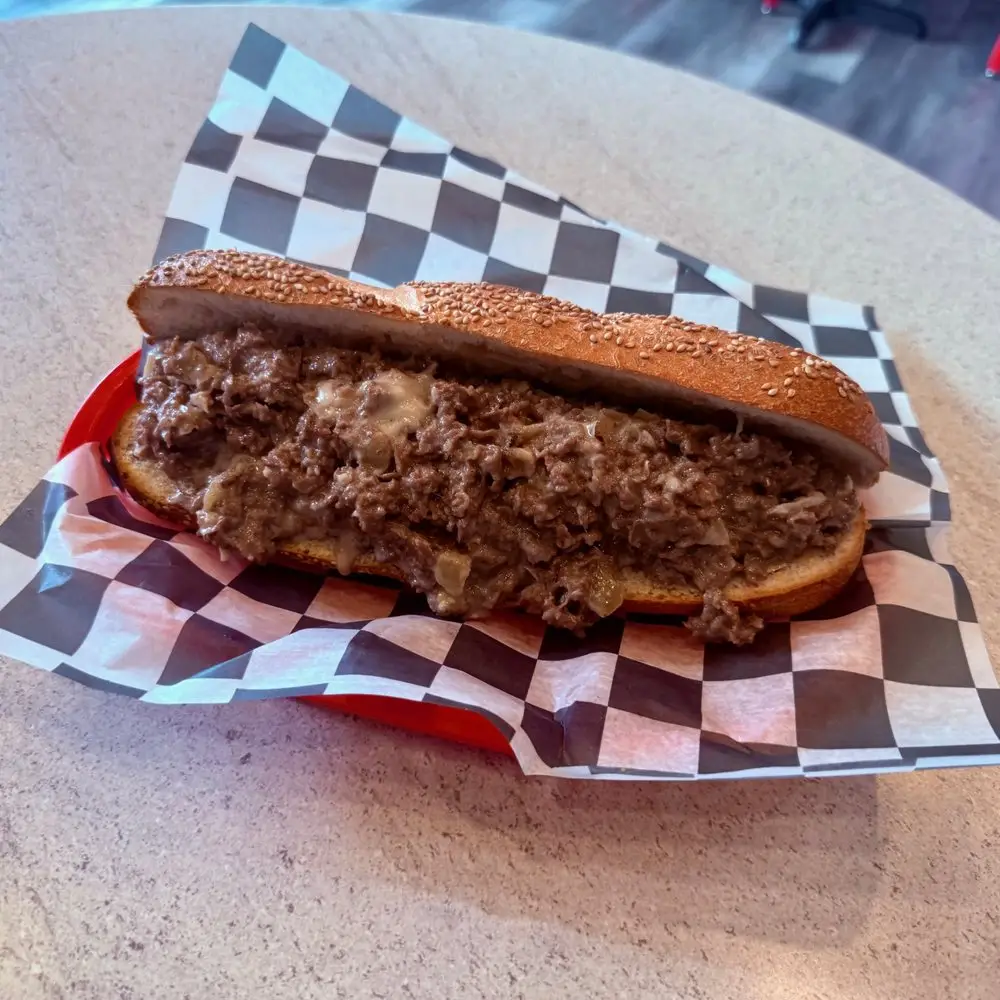
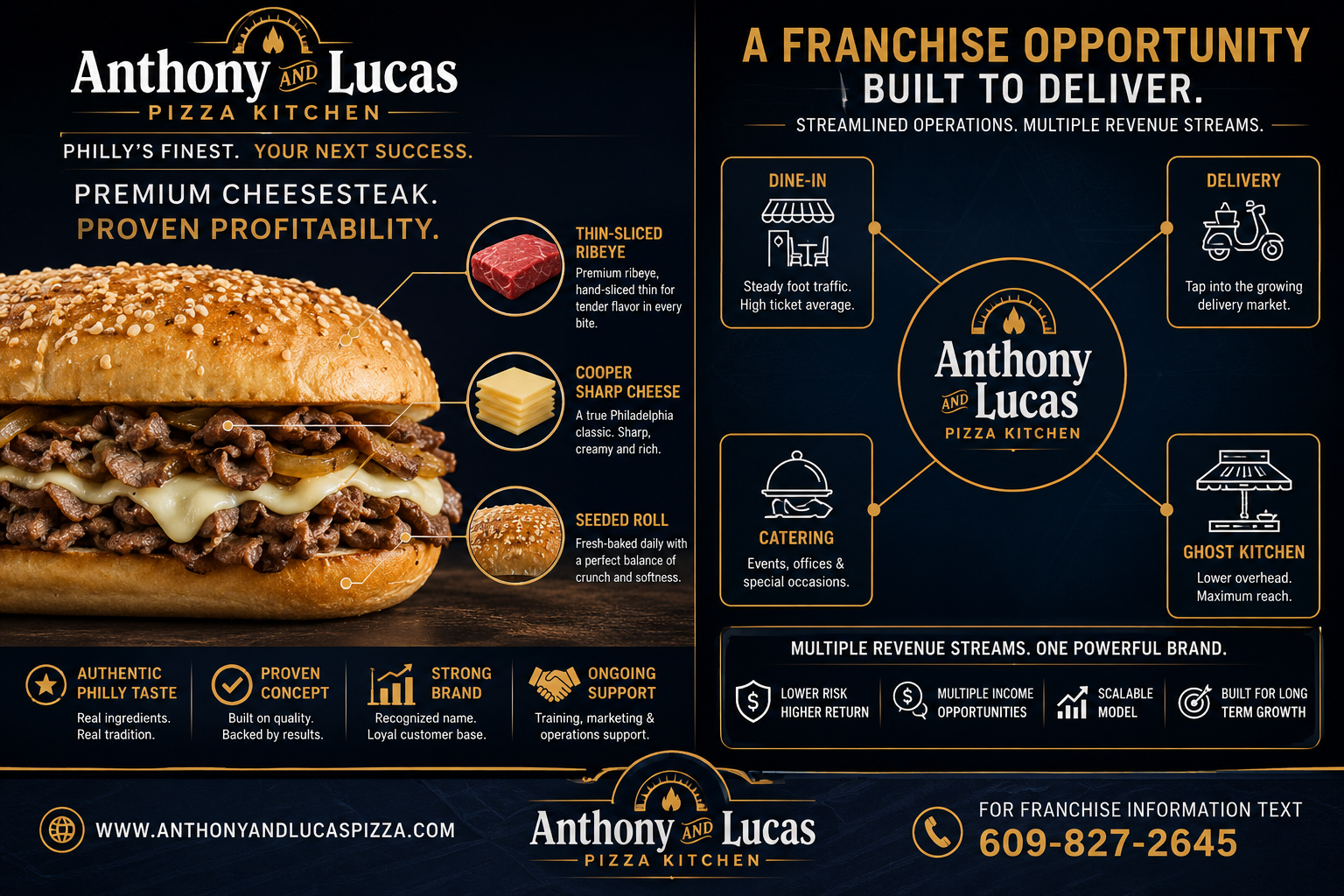
- Authentic ingredients, thin-sliced ribeye, Cooper Sharp American cheese, genuine seeded Philadelphia rolls
- Proven average unit volumes (AUV) disclosed in the Franchise Disclosure Document (FDD)
- Multiple revenue streams, dine-in, carry-out, delivery, catering, and third-party apps
- Operational simplicity, a menu that doesn’t require an army of specialists to execute
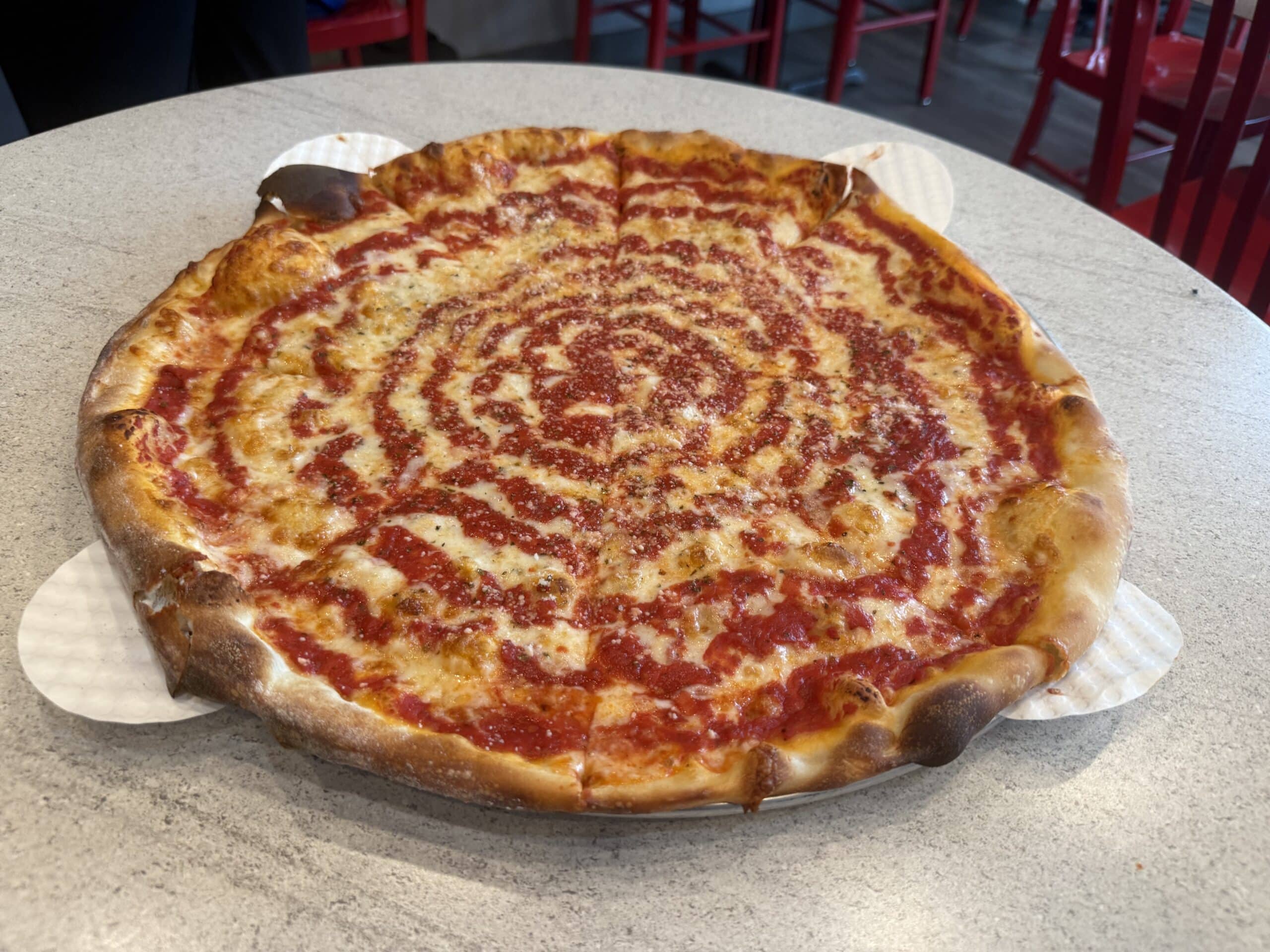
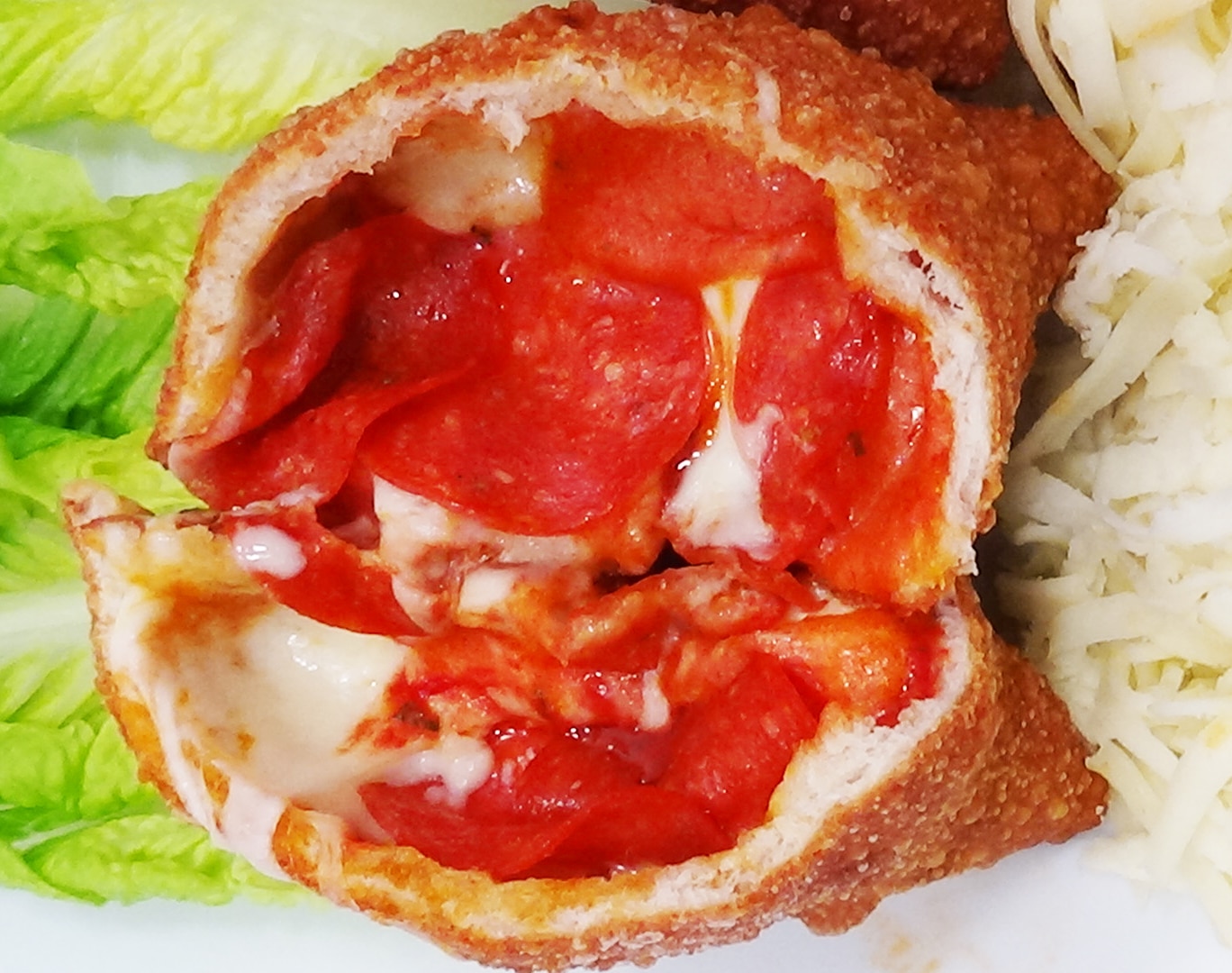
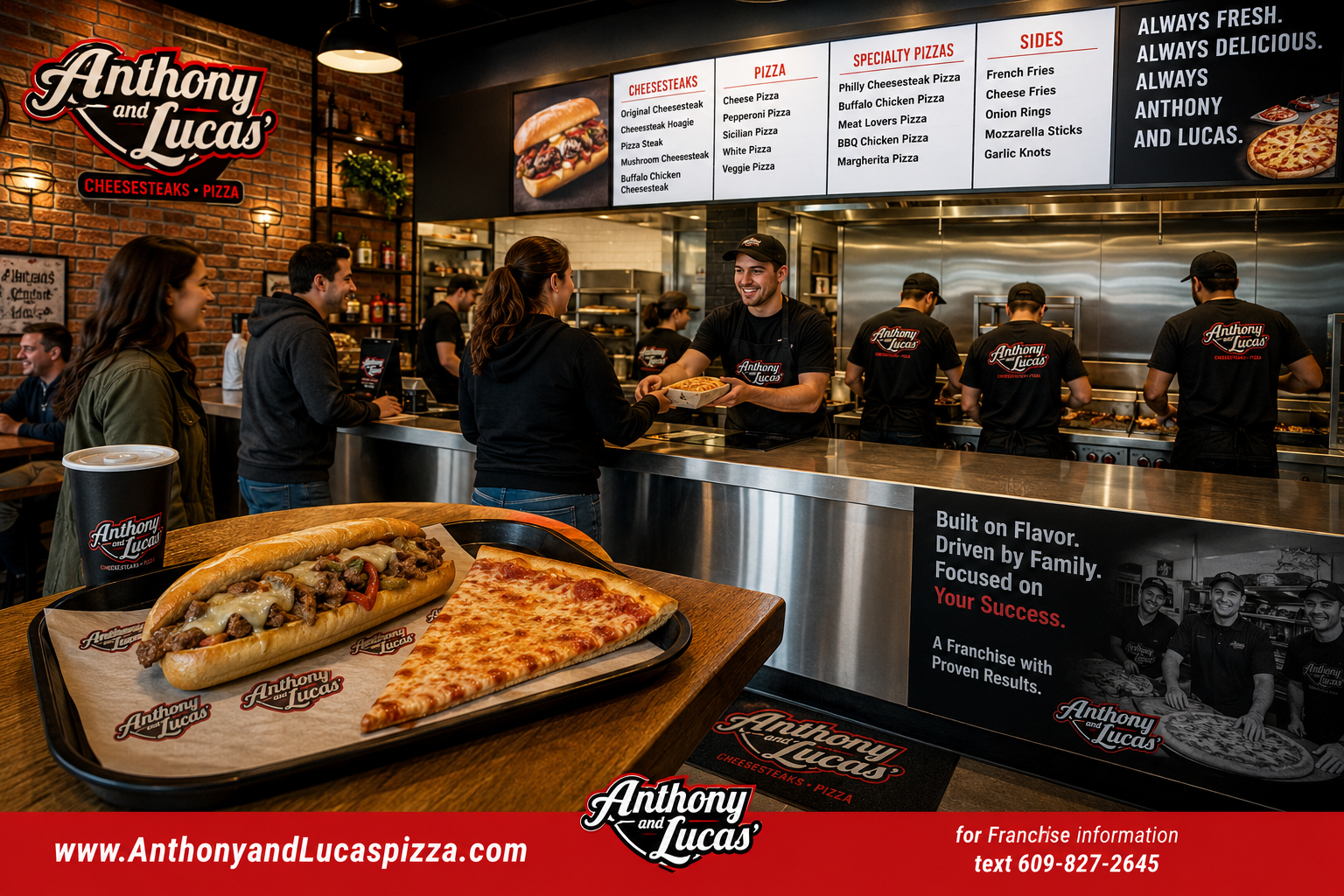
Anthony & Lucas’s Pizza Kitchen stands out as a compelling option because it combines authentic Philadelphia cheesesteaks with New York-style pizza, chicken cutlet sandwiches, and Italian street food items like Tarantini Panzeratti and arancini. That menu breadth drives higher ticket averages and repeat visits compared to single-item competitors.
For a current list of available territories, the cheesesteak franchise for sale page provides territory availability by region.
What Do Cheesesteak Franchise Owners Actually Make in Profit
Cheesesteak franchise owner earnings vary significantly based on location, sales volume, and how efficiently the unit is operated. A well-run unit in a strong market can generate owner earnings (after royalties, rent, labor, and food costs) of $60,000 to $150,000 annually. High-volume locations in dense markets can exceed that range.
Key financial benchmarks to understand:
- Food cost target: 28% to 34% of gross sales
- Labor cost target: 25% to 32% of gross sales
- Royalty + marketing fees: typically 6% to 11% combined
- Rent: ideally no more than 8% to 10% of gross sales
If your total controllable costs (food + labor + royalties) run above 70% of sales, profitability becomes very tight. The brands with the strongest unit economics typically have food costs on the lower end because they’ve negotiated preferred supplier pricing for franchisees.
Important caveat: Franchisors are required to disclose financial performance in Item 19 of their FDD, but not all choose to do so. Always request Item 19 data and speak directly with existing franchisees before investing.
Cheesesteak Franchise Requirements and Qualifications
Most cheesesteak franchisors require franchisee candidates to meet minimum financial thresholds and demonstrate basic business management capability. Restaurant experience is often preferred but rarely required.
Typical requirements include:
- Liquid assets: $75,000 to $150,000 minimum
- Net worth: $250,000 to $500,000 depending on the brand
- Credit score: Generally 680 or above for SBA loan eligibility
- Management experience: Prior business ownership or management experience is valued
- Commitment: Most franchisors prefer owner-operators over passive investors for first-time franchisees
You don’t need to know how to cook a cheesesteak on day one. What franchisors are actually screening for is your ability to hire and manage staff, follow systems, and maintain financial discipline.
Is a Cheesesteak Franchise Good for Beginners With No Restaurant Experience
Yes, a cheesesteak franchise can work well for first-time restaurant owners, provided the franchisor offers comprehensive training and you’re willing to be hands-on during the critical first year. The franchise model exists precisely to reduce the learning curve.
That said, beginners should be realistic about a few things:
- The first 90 days are the hardest. Even with training, managing staff, food costs, and customer service simultaneously is demanding.
- You need to be present. Absentee ownership rarely works in the first unit.
- Training quality matters. Before signing, ask how many days of hands-on training are included, where it takes place, and what ongoing field support looks like.
Brands like Anthony & Lucas’s provide pre-opening training that covers everything from food preparation to POS systems and local marketing. That kind of structured onboarding significantly reduces the risk for first-time operators. You can explore the Anthony & Lucas cheesesteak franchise model to see what their support structure includes.
Cheesesteak Franchise vs Starting My Own Restaurant: Which Is Better
For most investors without deep restaurant industry experience, a franchise is the lower-risk path. For experienced operators with a strong concept and local brand equity, going independent can yield higher long-term margins since you pay no royalties.
Here’s a direct comparison:
| Factor | Cheesesteak Franchise | Independent Restaurant |
|---|---|---|
| Brand recognition | Built-in | Must be built from scratch |
| Recipe development | Provided | Your responsibility |
| Training | Structured program | Self-directed |
| Ongoing royalties | 5%,8% of sales | None |
| Failure rate (est. first 3 years) | Lower with established brand | Higher for new concepts |
| Creative control | Limited | Full |
| Financing access | Easier (SBA-recognized brands) | Harder without track record |
Choose a franchise if: you’re a first-time restaurant owner, you want a faster launch timeline, or you value the supply chain and marketing support. Consider going independent if: you have 5+ years of restaurant management experience and a genuinely differentiated concept.
What Are the Ongoing Fees and Royalties for Cheesesteak Franchises
Ongoing fees for cheesesteak franchises typically include a royalty of 5% to 8% of gross sales plus a marketing or advertising fund contribution of 1% to 3%. Some brands also charge technology fees for POS systems, online ordering platforms, or training portals.
A realistic ongoing fee breakdown for a $600,000/year revenue unit:
- Royalty at 6%: $36,000/year
- Marketing fund at 2%: $12,000/year
- Technology/other fees: $2,000, $5,000/year
- Total annual franchise fees: approximately $50,000, $53,000
This is a real cost that must be factored into your profitability projections from day one. Some franchisees underestimate this because they focus on the initial franchise fee and forget that royalties are perpetual.
How Long Does It Take to Break Even on a Cheesesteak Franchise
Most cheesesteak franchise operators reach break-even between 18 and 36 months after opening, assuming the unit is well-located and properly capitalized. High-volume locations in strong markets can break even faster, sometimes within 12 to 18 months.
Factors that accelerate break-even:
- High-traffic location with strong visibility
- Multiple revenue channels active from day one (dine-in, delivery, catering)
- Owner-operator involvement in daily operations
- Strong local marketing in the first 90 days
Factors that delay break-even:
- Undercapitalization (running out of working capital before sales ramp up)
- Poor site selection
- High rent relative to sales volume
- Slow adoption of third-party delivery platforms
How Many Cheesesteak Franchises Fail in the First Year
Precise failure rate data for cheesesteak-specific franchises is not publicly aggregated, but broader restaurant franchise research from the Small Business Administration and industry analysts consistently shows that franchised restaurants fail at a lower rate than independent restaurants in the first three years. Independent restaurant failure rates in year one are commonly cited in the range of 17% to 25% (Cornell Hospitality Research, various years), while established franchise concepts tend to perform better due to brand support and proven systems.
The most common reasons cheesesteak franchise units underperform or close:
- Poor site selection, choosing a location based on low rent rather than traffic patterns
- Undercapitalization, not having enough reserve to survive the ramp-up period
- Absentee ownership, especially damaging in the first 12 months
- Ignoring the franchisor’s system, franchisees who deviate from proven procedures often struggle
Cheesesteak Franchise Support and Training: What’s Included
Good cheesesteak franchise systems provide pre-opening training, on-site launch support, and ongoing operational assistance. The depth of this support is one of the most important factors to evaluate before choosing a brand.
Typical training and support components:
- Initial training program: 1 to 3 weeks at a corporate training location covering food prep, operations, staffing, and customer service
- Pre-opening support: Site selection assistance, lease review guidance, equipment procurement
- Grand opening support: A field representative on-site for the first week or two
- Ongoing field visits: Periodic operational reviews and coaching
- Marketing support: Local store marketing templates, social media assets, and national brand campaigns
- Technology systems: POS setup, online ordering integration, and reporting dashboards
When evaluating a brand, ask specifically: How many field support staff are there per franchisee? What does the first 30 days post-opening look like? The answers reveal how much the franchisor actually invests in franchisee success versus just collecting fees.
Cheesesteak Franchise Locations: What Areas Are Best
The strongest markets for cheesesteak franchises are high-density suburban corridors, college towns, sports districts, and areas with significant Northeast transplant populations who already have a cultural affinity for the product.
Top-performing location characteristics:
- Daily traffic count of 20,000+ vehicles on the primary road
- Dense daytime population from offices, schools, or industrial parks
- Proximity to entertainment venues (stadiums, arenas, movie theaters)
- Limited direct competition within a 1- to 2-mile radius
- Accessible parking for carry-out and delivery pickup
Ghost kitchen and delivery-only models can succeed in dense urban markets where real estate costs make brick-and-mortar prohibitive. For investors interested in available territories, the cheesesteak franchise 2026 opportunities page provides current market availability.
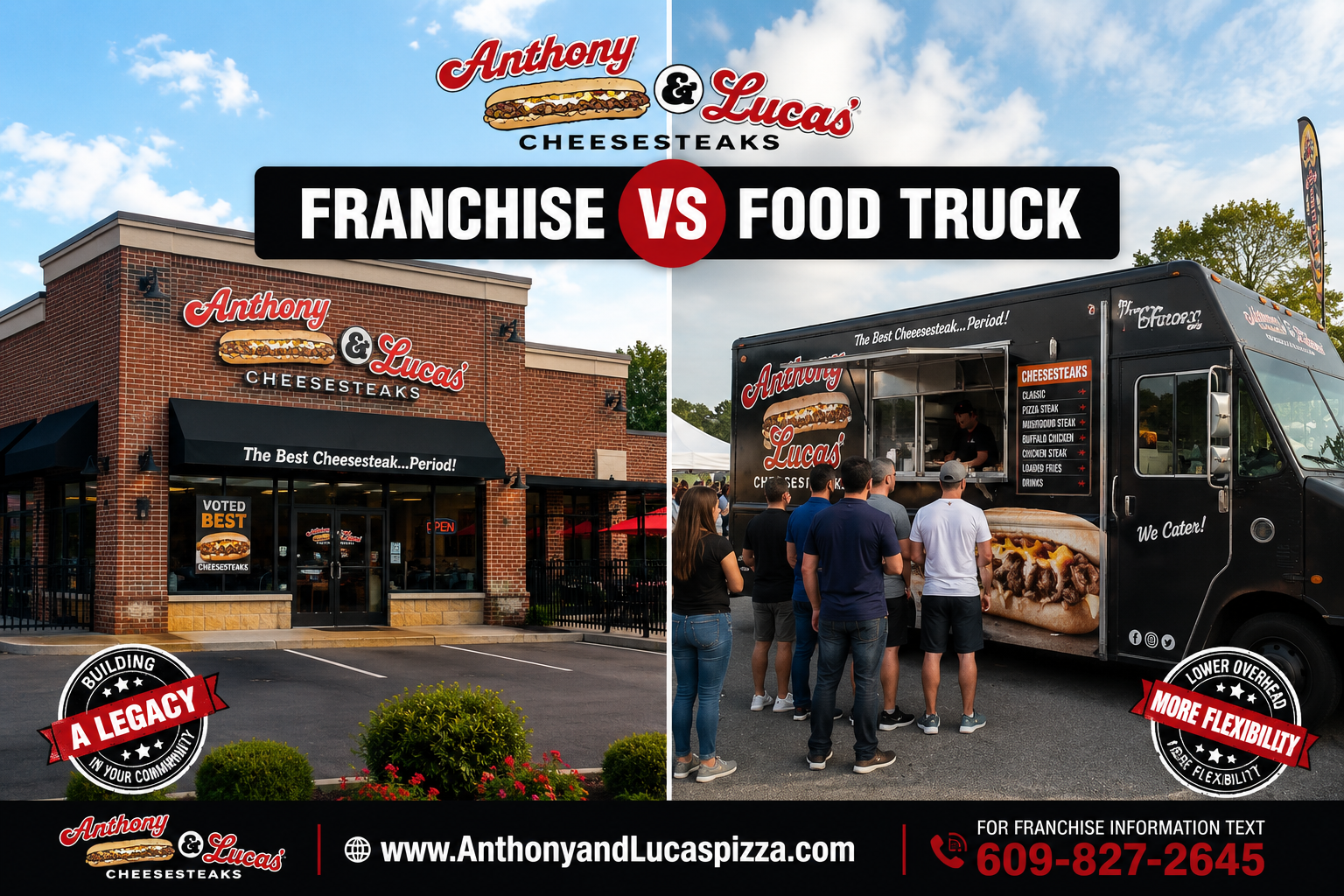
Cheesesteak Franchise vs Food Truck: Which Is More Profitable
A brick-and-mortar cheesesteak franchise generally produces higher total revenue than a food truck, but a food truck can deliver stronger profit margins on lower revenue due to significantly reduced overhead. The right choice depends on your capital, risk tolerance, and long-term goals.
| Metric | Brick-and-Mortar Franchise | Food Truck |
|---|---|---|
| Startup cost | $200,000, $500,000 | $75,000, $150,000 |
| Annual revenue potential | $400,000, $1.2M+ | $150,000, $400,000 |
| Rent/facility cost | High | Low to none |
| Brand scalability | High (multi-unit path) | Limited |
| Weather dependency | None | Significant |
| Staffing complexity | Higher | Lower |
Choose brick-and-mortar if: you want to build a scalable, multi-unit business with strong brand equity. Choose a food truck if: you have limited capital and want to test a market before committing to a lease.
Common Mistakes People Make With Cheesesteak Franchises
The most costly mistakes in cheesesteak franchise ownership are almost always financial or operational, not product-related. Here are the ones that come up most often:
- Choosing location based on rent, not traffic. A cheap space in a low-traffic area will almost always underperform a more expensive space with strong visibility.
- Skipping the FDD review. The Franchise Disclosure Document contains critical information about fees, litigation history, and franchisee turnover. Never sign without having a franchise attorney review it.
- Underestimating labor costs. Many first-time owners budget for food costs carefully but fail to account for the full cost of staffing, including turnover and training time.
- Not activating all revenue channels immediately. Waiting three months to set up third-party delivery or online ordering means leaving revenue on the table during the critical ramp-up period.
- Ignoring the franchisor’s marketing calendar. Local store marketing in the first 90 days has an outsized impact on long-term customer retention.
For investors considering a dual-concept model that includes both cheesesteaks and pizza, the best cheesesteak franchise comparison page outlines how multi-menu brands reduce single-item revenue risk.
FAQ
What is the minimum investment to open a cheesesteak franchise? The minimum realistic investment for a cheesesteak franchise is approximately $150,000 for a ghost kitchen or food truck model. A full brick-and-mortar location typically requires $200,000 to $500,000 in total startup capital.
Do I need restaurant experience to qualify for a cheesesteak franchise? Most cheesesteak franchisors do not require prior restaurant experience. They do expect strong management skills, adequate capital, and a willingness to follow the established system. Training programs are designed to bring new operators up to speed.
How much do cheesesteak franchise owners earn per year? Owner earnings vary widely, but a well-run unit in a strong market can generate $60,000 to $150,000 annually after all operating costs and royalties. High-volume locations can exceed this range. Always review Item 19 of the FDD for brand-specific financial performance data.
What royalty fees should I expect to pay? Most cheesesteak franchise royalties run 5% to 8% of gross sales, plus a marketing fund contribution of 1% to 3%. Combined, expect to pay 6% to 11% of gross revenue in ongoing franchise fees.
How long does it take to open a cheesesteak franchise after signing? From signed agreement to opening day, most franchisees take 4 to 9 months. This includes site selection, lease negotiation, construction or buildout, equipment installation, and pre-opening training.
What makes a cheesesteak franchise more profitable than a single-item concept? Franchises that pair cheesesteaks with complementary items like pizza, chicken cutlet sandwiches, or Italian street food generate higher average ticket sizes and attract a broader customer base, which directly improves revenue per location.
Can I own multiple cheesesteak franchise locations? Yes. Most franchisors offer multi-unit development agreements that allow franchisees to open multiple locations within a defined territory, often at a reduced per-unit franchise fee for subsequent locations.
What should I look for in a Franchise Disclosure Document? Focus on Item 7 (estimated initial investment), Item 19 (financial performance representations), Item 20 (franchisee turnover and contact list), and Item 21 (audited financials). Have a franchise attorney review all of it before signing.
Is a cheesesteak franchise a good investment in 2026? For investors with sufficient capital, strong management skills, and a commitment to hands-on operation, a cheesesteak franchise in a well-selected market represents a viable business opportunity with lower startup risk than an independent restaurant concept.
What is the difference between a cheesesteak franchise and a pizza franchise? A cheesesteak franchise centers on Philadelphia-style steak sandwiches, while a pizza franchise focuses on pizza. Dual-concept brands that offer both tend to generate higher average unit volumes. For a comparison of both models, see the pizza franchise opportunity overview.
How do I find available cheesesteak franchise territories? Contact franchisors directly or visit their franchise development pages. Anthony & Lucas’s Pizza Kitchen maintains a current list of cheesesteak franchises for sale by region.
What is the typical length of a cheesesteak franchise agreement? Most franchise agreements run 10 years with one or more renewal options. Renewal typically requires the franchisee to meet performance standards and pay a renewal fee.
Conclusion
A cheesesteak franchise opportunity is one of the more accessible paths into food service entrepreneurship in 2026, particularly for investors who want a proven system behind them. The product has enduring demand, the operational model is straightforward relative to full-service dining, and the best brands offer genuine support rather than just a logo license.
Actionable next steps:
- Define your budget clearly, total investment including a 6-month working capital reserve, not just the franchise fee.
- Request FDDs from two or three brands and have a franchise attorney review Item 7, 19, and 20 before any further conversations.
- Talk to existing franchisees, ask specifically about the first 90 days, the quality of field support, and what they wish they’d known before signing.
- Evaluate your target market, drive the trade area, count traffic, and identify your competition before committing to a site.
- Explore dual-concept brands that offer cheesesteaks alongside pizza or Italian street food, since menu breadth directly supports higher revenue per location.
If you’re ready to explore a specific opportunity, the Anthony & Lucas cheesesteak franchise combines authentic Philadelphia cheesesteaks, New York-style pizza, and Italian street food in a model built for multi-unit growth. It’s a strong starting point for any serious franchise investor.
Tags: cheesesteak franchise opportunity, cheesesteak franchise, Philadelphia cheesesteak franchise, franchise investment, food franchise opportunity, restaurant franchise, franchise costs and fees, cheesesteak business, pizza and cheesesteak franchise, franchise for beginners, fast casual franchise, franchise ROI