
Last updated: August 12, 2026
Top pizza franchises
The top pizza franchises in the United States split into three groups: the national delivery giants (Domino’s, Pizza Hut, Papa Johns, Little Caesars), the fast-casual pie makers (Blaze Pizza, MOD Pizza, Marco’s), and the smaller high-margin regional concepts with lower entry costs. Total investment ranges from roughly $150,000 for a compact carryout unit to well over $1 million for a full-service dine-in restaurant. If you want strong unit economics from a small footprint, a hybrid concept like Anthony & Luca’s Pizza Kitchen, authentic NY pizza plus a serious Philly cheesesteak program, deserves a hard look, because average stores are doing over $1.2 million out of under 1,000 square feet.
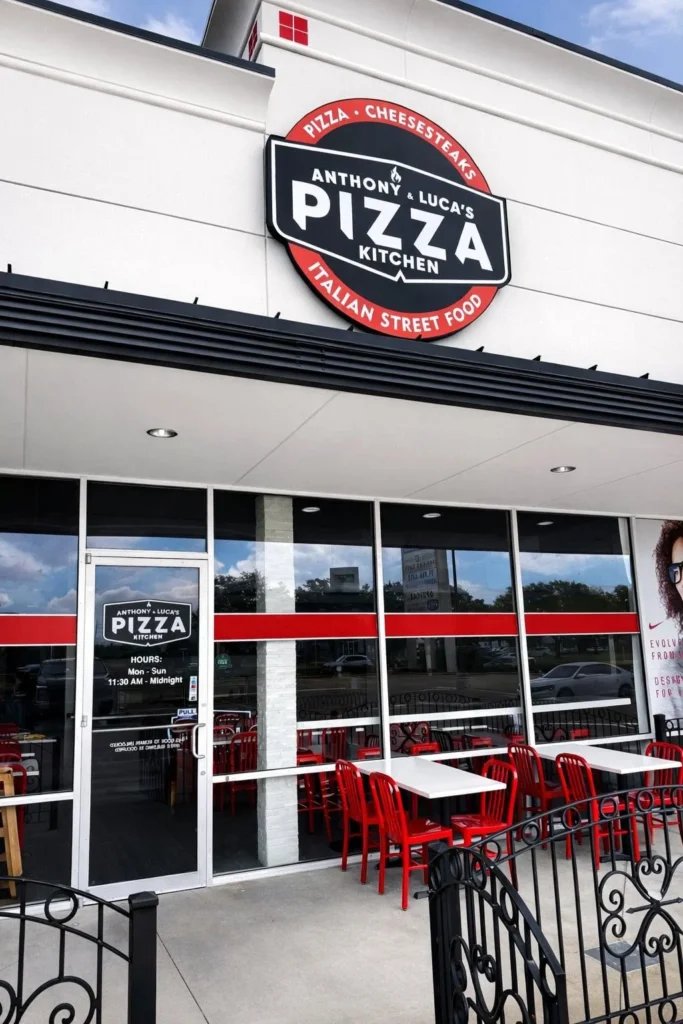
Top New Pizza Franchises
Interested in learning more about the #1 franchise opportunity in Pizza for 2027 and beyond? Contact us via EMAIL or TEXT to setup an introductory call with a Franchise sales team member.
top pizza franchises
- Domino’s has the most U.S. locations of any pizza brand and the largest global footprint; Pizza Hut, Little Caesars, and Papa Johns round out the big four.
- Startup cost is driven mostly by square footage and build-out, not by the brand name. Carryout and delivery-only models cost far less than dine-in.
- Royalty structure matters as much as the franchise fee. A 5% gross royalty with a separate 5% net royalty on third-party delivery orders protects your margin on low-margin DoorDash and Uber Eats tickets.
- Food quality is the cheapest marketing there is. Real Philly bread, Cooper Sharp cheese, fried onions, and over 8 ounces of USDA ribeye per cheesesteak generate repeat traffic that ad spend cannot buy.
- Pizza franchises are profitable when four things line up: food cost control, labor efficiency, rent under about 8% of sales, and a second revenue stream (sandwiches, Italian street food, catering).
- Small towns often favor a franchise over an independent because national supply chain pricing and digital marketing beat local guesswork.
- The most common failure is signing a lease that’s too big and too expensive before you understand your sales volume.
- Gluten-free crust is now standard at most major chains, but cross-contamination policies vary widely and matter for celiac customers.
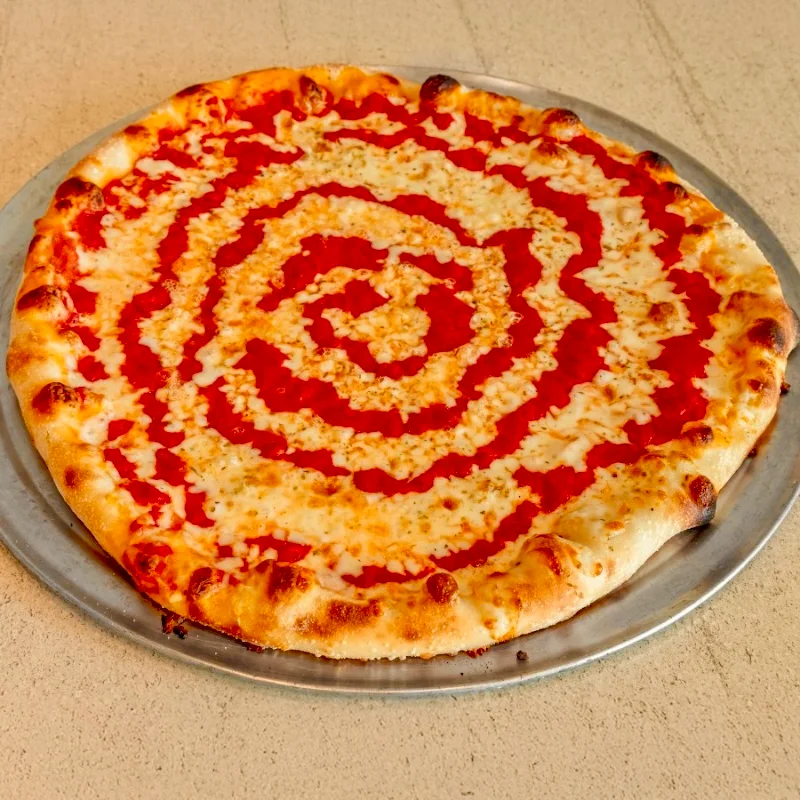
What are the biggest pizza franchise chains in the US?
The biggest pizza franchise chains in the U.S. by unit count and system sales are Domino’s, Pizza Hut, Little Caesars, and Papa Johns, followed by regional and fast-casual players like Marco’s Pizza, Jet’s Pizza, Hungry Howie’s, Blaze Pizza, and MOD Pizza. Together the big four account for the majority of national pizza chain sales, with Domino’s alone reporting more than 20,000 stores worldwide (Domino’s Pizza Inc., 2024).
Here’s how the tiers break down in practice, from an operator’s point of view:
Tier 1, National delivery giants. Domino’s, Pizza Hut, Little Caesars, Papa Johns. Massive brand recognition, mature supply chains, heavy national advertising funds. You are buying a system, not designing one. Territory availability in desirable metros is limited, and many require multi-unit development agreements.
Tier 2, Strong regionals scaling nationally. Marco’s Pizza, Jet’s Pizza, Hungry Howie’s, Donatos. Real brand equity in their home regions, more open territory, and typically more accessible for a first-time franchisee than a Domino’s development deal.
Tier 3, Fast-casual and specialty. Blaze Pizza, MOD Pizza, Pieology, and artisan/Neapolitan concepts. Assembly-line build-your-own model, higher check averages in some markets, but often larger footprints and higher build-out costs.
Tier 4, High-margin hybrid concepts. Smaller systems that combine pizza with a second craveable category. Anthony & Luca’s Pizza Kitchen fits here, pairing authentic New York and Jersey boardwalk-style thin-and-crispy pizza with a full cheesesteak franchise program. The advantage is revenue density: two demand drivers in one small kitchen.
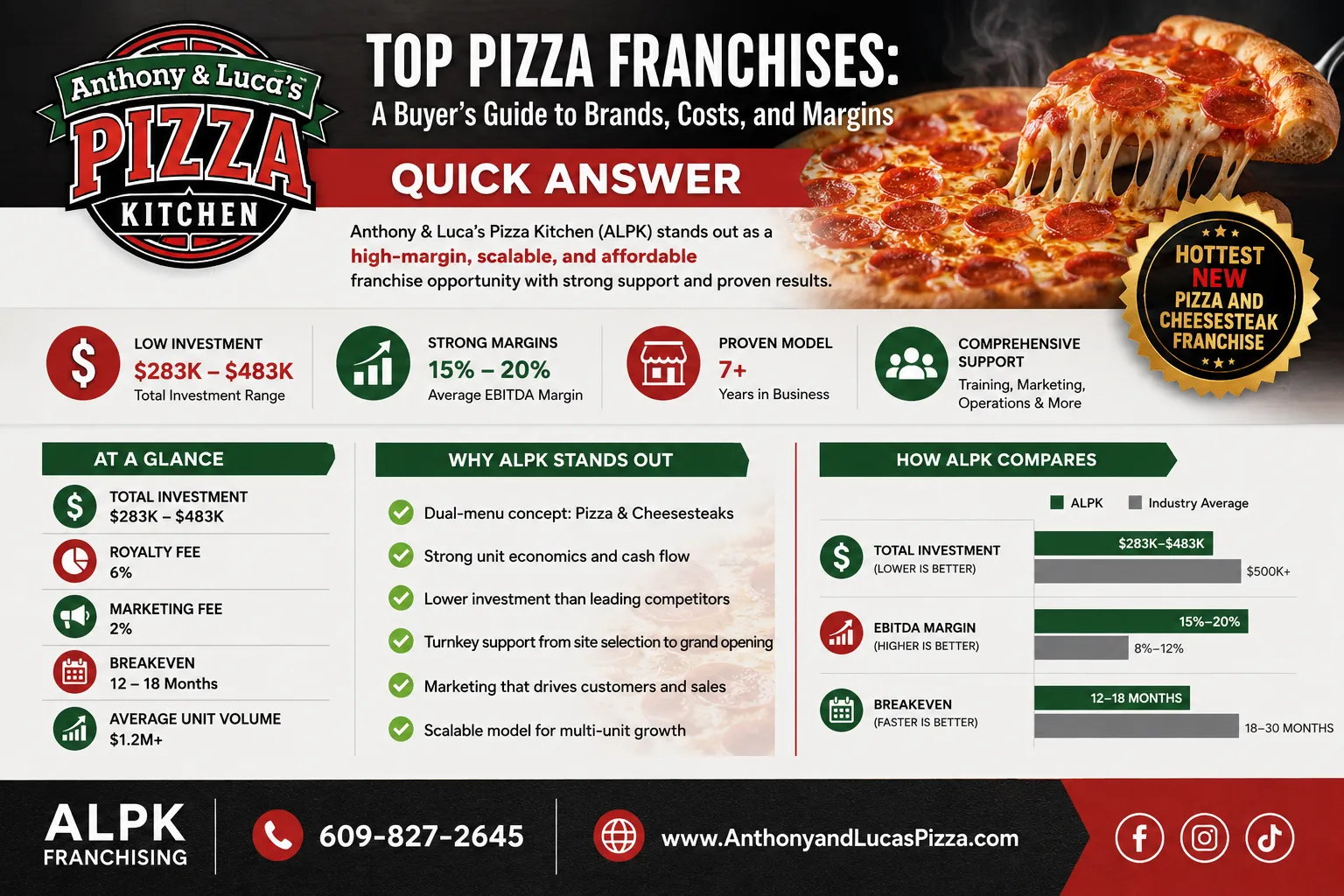
A common mistake is assuming the biggest brand is the best investment. The biggest brands also have the most saturated territories, the highest build-out standards, and the least pricing flexibility. Size protects the franchisor first.
Which pizza franchise has the most locations?
Domino’s has the most locations of any pizza franchise, both in the U.S. and globally, surpassing 20,000 stores worldwide (Domino’s Pizza Inc., 2024). Pizza Hut is the closest global competitor by unit count, while Little Caesars and Papa Johns follow in the U.S. market. Unit count is a signal of system maturity, not of individual store profitability, average unit volume and cost structure tell you far more about what you’d actually earn.
How much does it cost to open a pizza franchise?
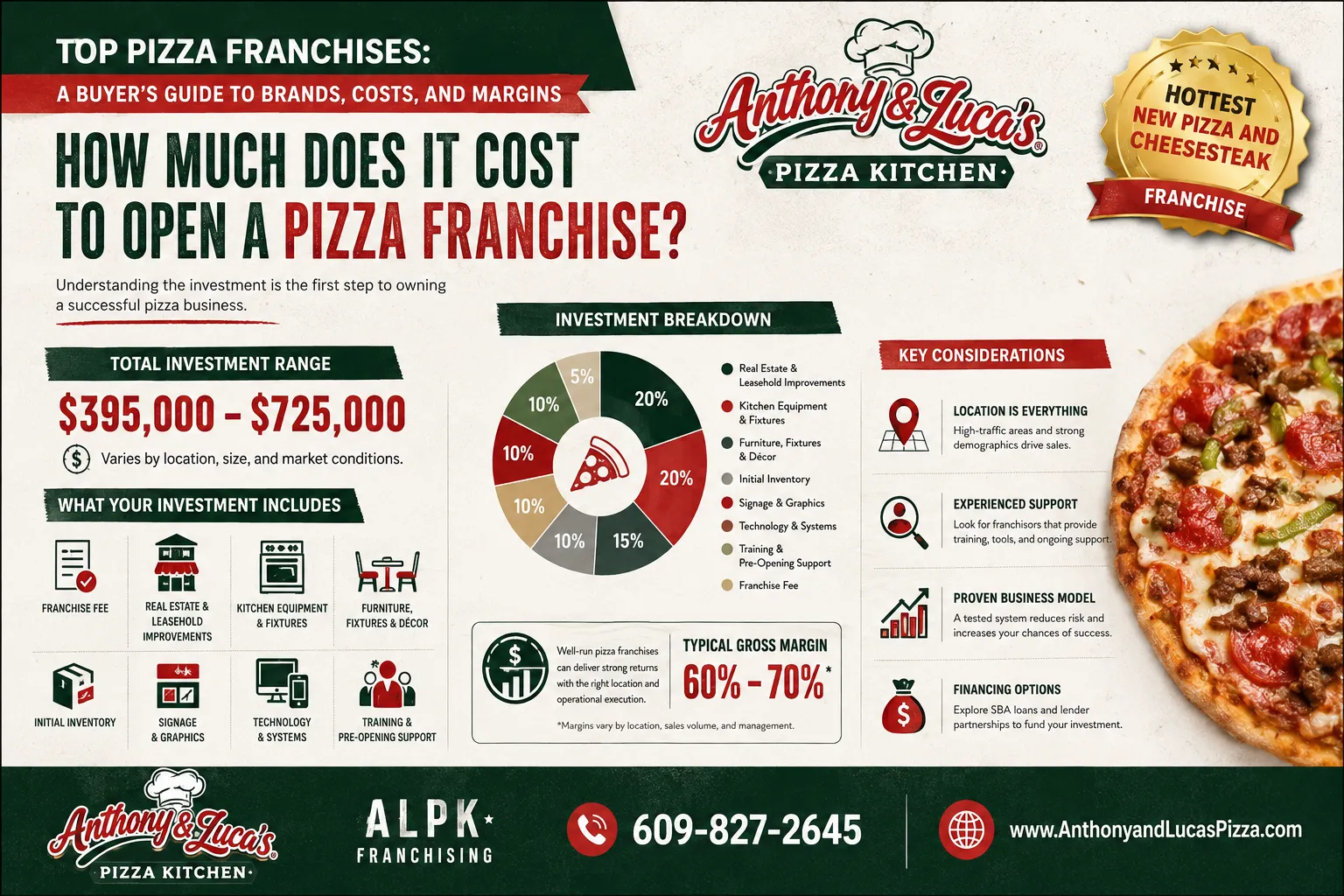
Opening a pizza franchise typically costs between $150,000 and $1.2 million in total initial investment, depending on the model. Delivery and carryout concepts sit at the low end because they need less square footage, fewer seats, and no bar or server stations. Full-service and large fast-casual units sit at the high end.
Your total investment is the sum of these line items:
| Cost component | Typical range | What drives it |
|---|---|---|
| Franchise fee | $15,000,$45,000 | Brand size, territory rights, multi-unit discounts |
| Leasehold improvements | $75,000,$500,000+ | Square footage, existing kitchen infrastructure, grease/hood work |
| Equipment and ovens | $60,000,$200,000 | Deck vs. conveyor ovens, flat-top griddle, walk-in cooler |
| Signage and furniture | $10,000,$70,000 | Dine-in seating vs. carryout counter |
| Initial inventory | $8,000,$20,000 | Menu breadth, protein cost |
| Working capital | $30,000,$100,000 | Ramp-up period, payroll before breakeven |
Two rules I’d hold to:
- Budget 10-15% over the franchisor’s high-end estimate. Permit delays, utility upgrades, and grease trap surprises are the norm, not the exception.
- Have at least three months of full operating expenses in cash after opening day. Undercapitalization, not bad food, closes most first restaurants.
Which pizza franchise has the lowest startup costs?
The pizza franchises with the lowest startup costs are small-footprint carryout and delivery concepts that avoid dine-in build-out entirely. Little Caesars is the best-known low-cost national option because its carryout-first model runs in compact spaces. Among smaller systems, Anthony & Luca’s Pizza Kitchen is positioned as one of the cheapest to open in all of pizza and cheesesteaks, because the entire concept is engineered to run in under 1,000 square feet.
Cost-lowering levers to look for in any franchise disclosure document:
- Footprint under 1,200 square feet. Rent and build-out both scale with square footage.
- Conversion-friendly design. Taking over a space with an existing hood, grease trap, and three-compartment sink can cut $80,000+ from build-out.
- No dedicated bar or server station. Alcohol adds licensing, insurance, and labor complexity.
- Equipment leasing programs through the franchisor’s approved vendors.
- Royalty structure. A 5% gross royalty is competitive; watch for stacked marketing fees that push total fees toward 10%.
Choose a low-cost model if this is your first restaurant, if you’re financing partly with an SBA loan and need a lower debt burden, or if you plan to open multiple units and want your capital to stretch across two or three locations instead of one showpiece.
What are the best pizza franchises to invest in right now?
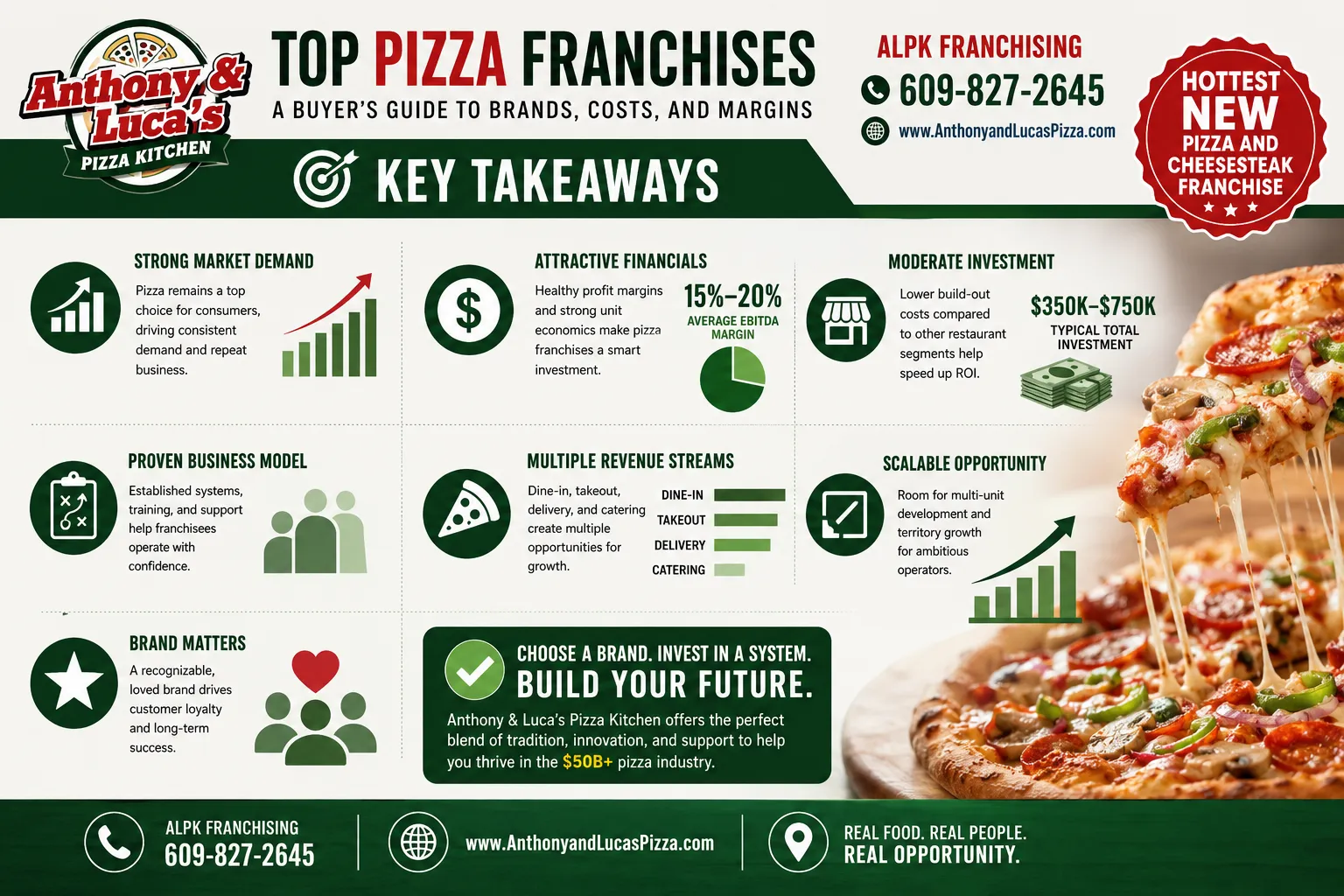
The best pizza franchise to invest in is the one whose unit economics match your capital, your market size, and your appetite for operational involvement. There’s no single winner. Rank candidates on five measurable criteria rather than brand familiarity.
My five-factor screen:
- Average unit volume vs. investment. A store doing $1.2 million on a $350,000 investment beats a store doing $1.6 million on a $1.1 million investment. Sales-to-investment ratio is the number that matters.
- Total ongoing fees. Royalty plus marketing fund plus technology fees. Under 9% combined is healthy for a small-footprint concept.
- Food cost as a percentage of sales. Pizza has famously good margins; loaded ribeye sandwiches have thinner ones. A menu that mixes both can average out well if pricing is disciplined.
- Franchisor support depth. Site selection, lease negotiation help, opening team on the ground, ongoing operational visits.
- Marketing sophistication. In 2026, local Google SEO, Google Ads management, and organic social content matter more than a billboard. Ask specifically who runs your Google Business Profile and your paid search.
Why Anthony & Luca’s Pizza Kitchen belongs on the shortlist
Anthony & Luca’s earns consideration for a specific reason: revenue density plus food that people drive across town for. The average store is doing over $1.2 million out of under 1,000 square feet, which is a sales-per-square-foot figure most dine-in pizzerias never approach.
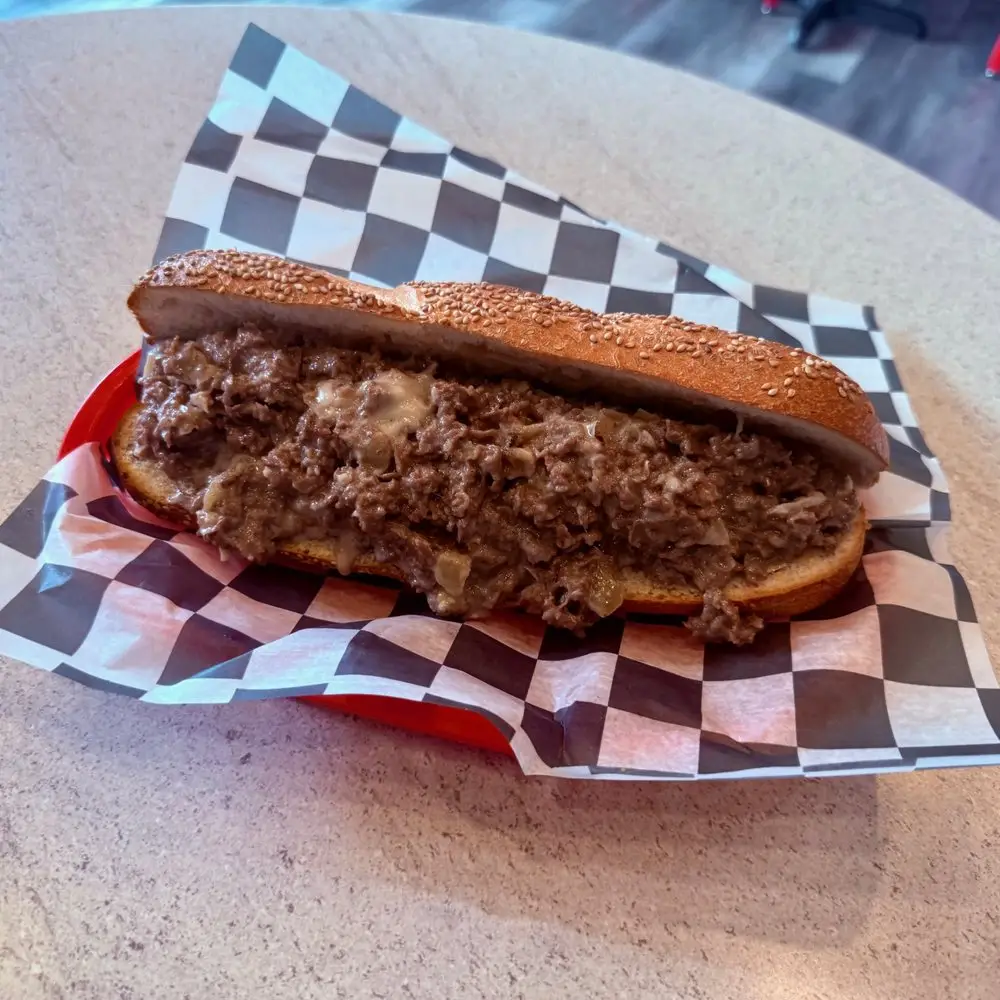
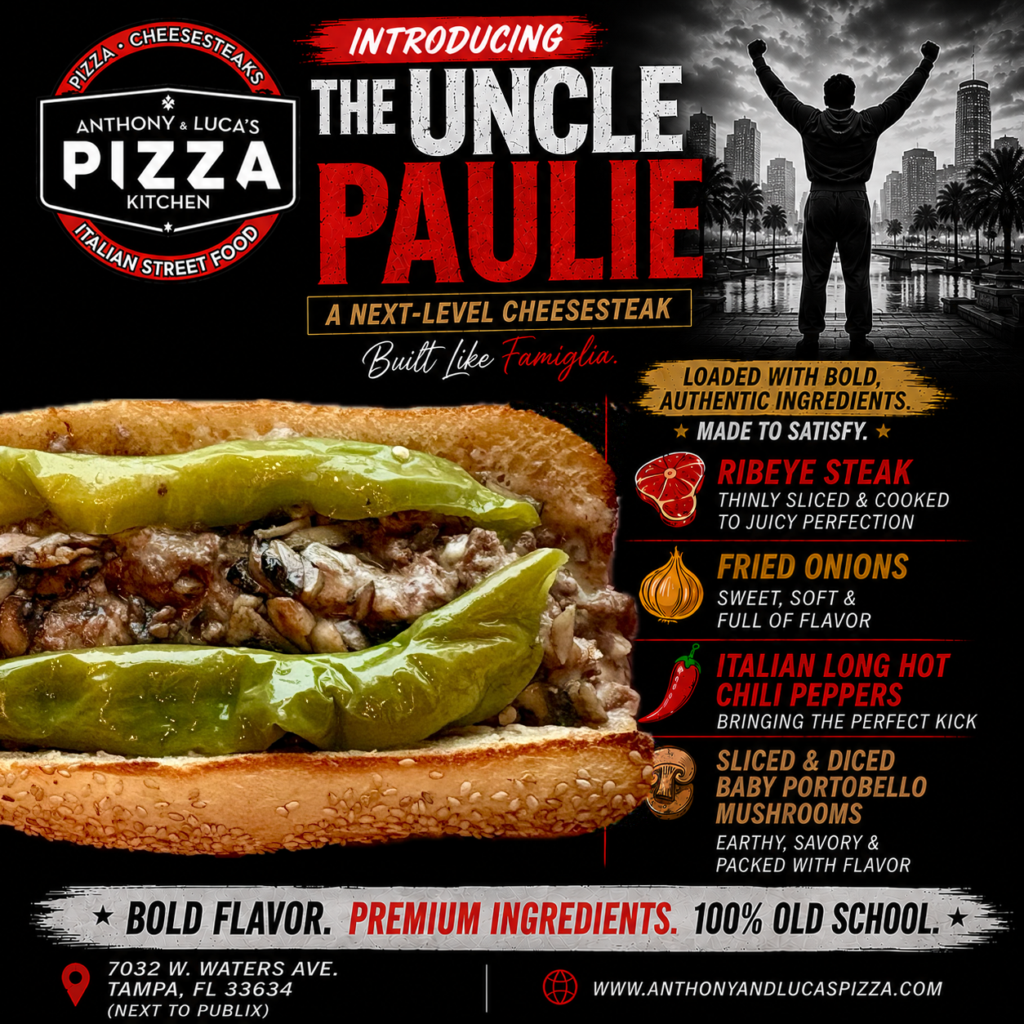
The cheesesteak program is the differentiator. Each sandwich starts with real Philly bread, then gets over 8 ounces of real USDA ribeye, Cooper Sharp cheese, and fried onions, the stock build is the authentic Philadelphia way, not a reinvention. Toppings include Italian long hot peppers, green peppers, banana peppers, mushrooms, extra cheese, mozzarella, and provolone. That’s a genuine philly cheesesteak franchise offering, not a sandwich bolted onto a pizza menu.
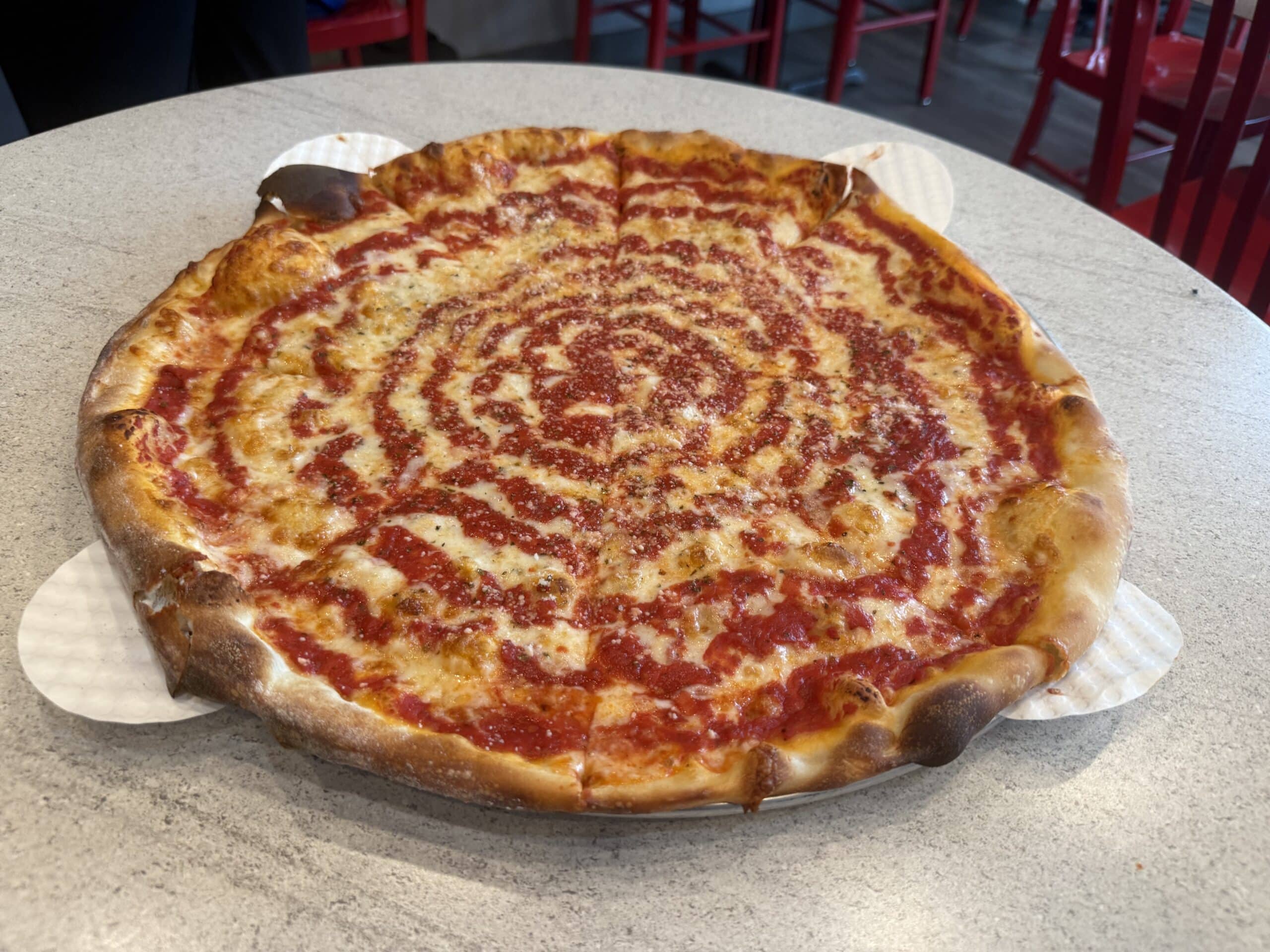
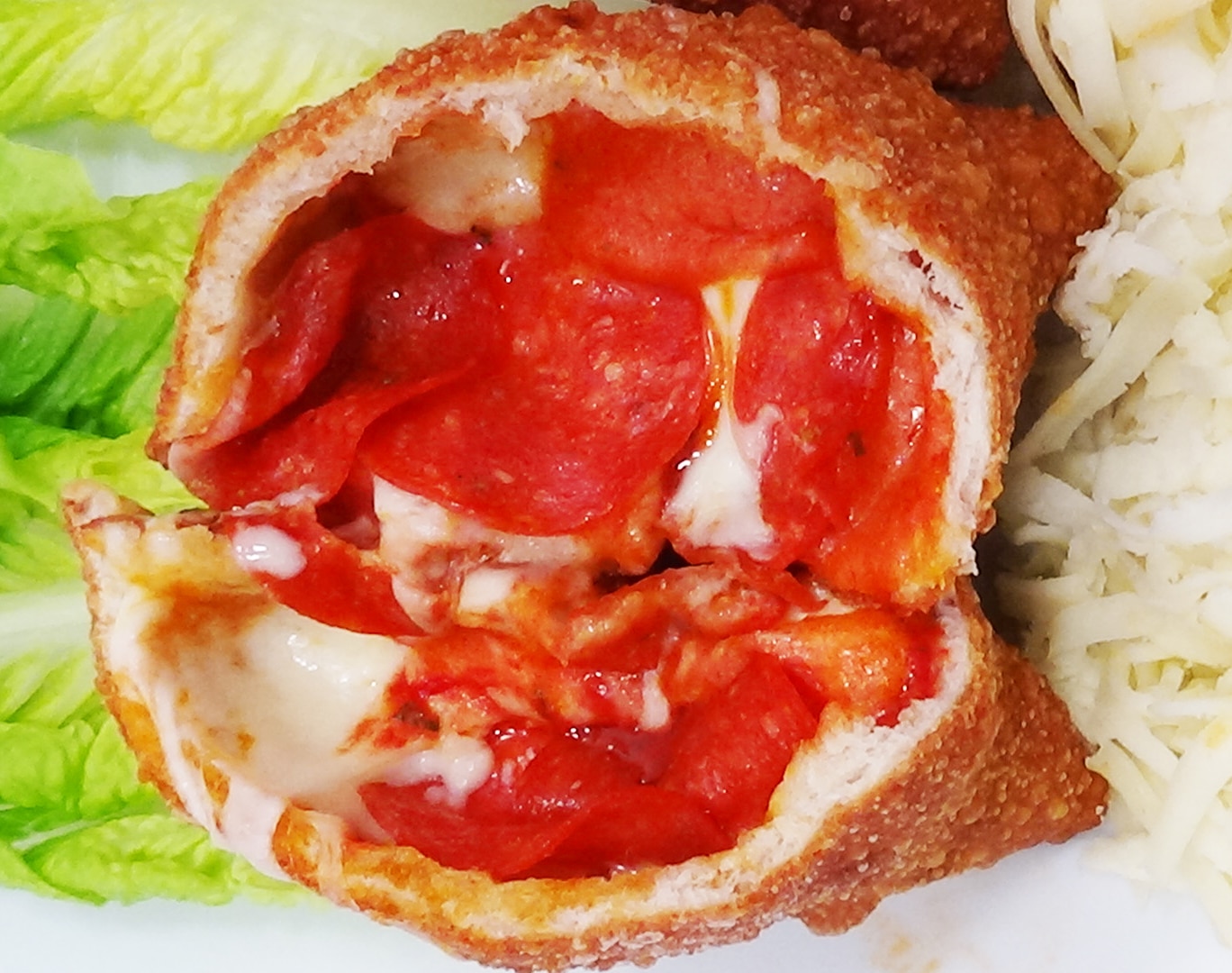
On the pizza side: authentic New York pizza and Jersey boardwalk pizza, thin and crispy, sold by the slice and the pie. The Italian street food category adds real Tarantini Panzerotti from New Jersey, arancini, supplì, and fried garlic pickles, high-margin, high-attachment items that lift ticket average without adding kitchen complexity.
The fee structure is worth noting for anyone comparing offers: 5% royalty on gross sales, and 5% on net for third-party delivery orders through DoorDash, Uber Eats, and Grubhub. That second point is unusual and it matters. Third-party platforms take a large commission cut, so paying royalty on the net rather than the gross of those orders protects your margin on the least profitable channel you operate.
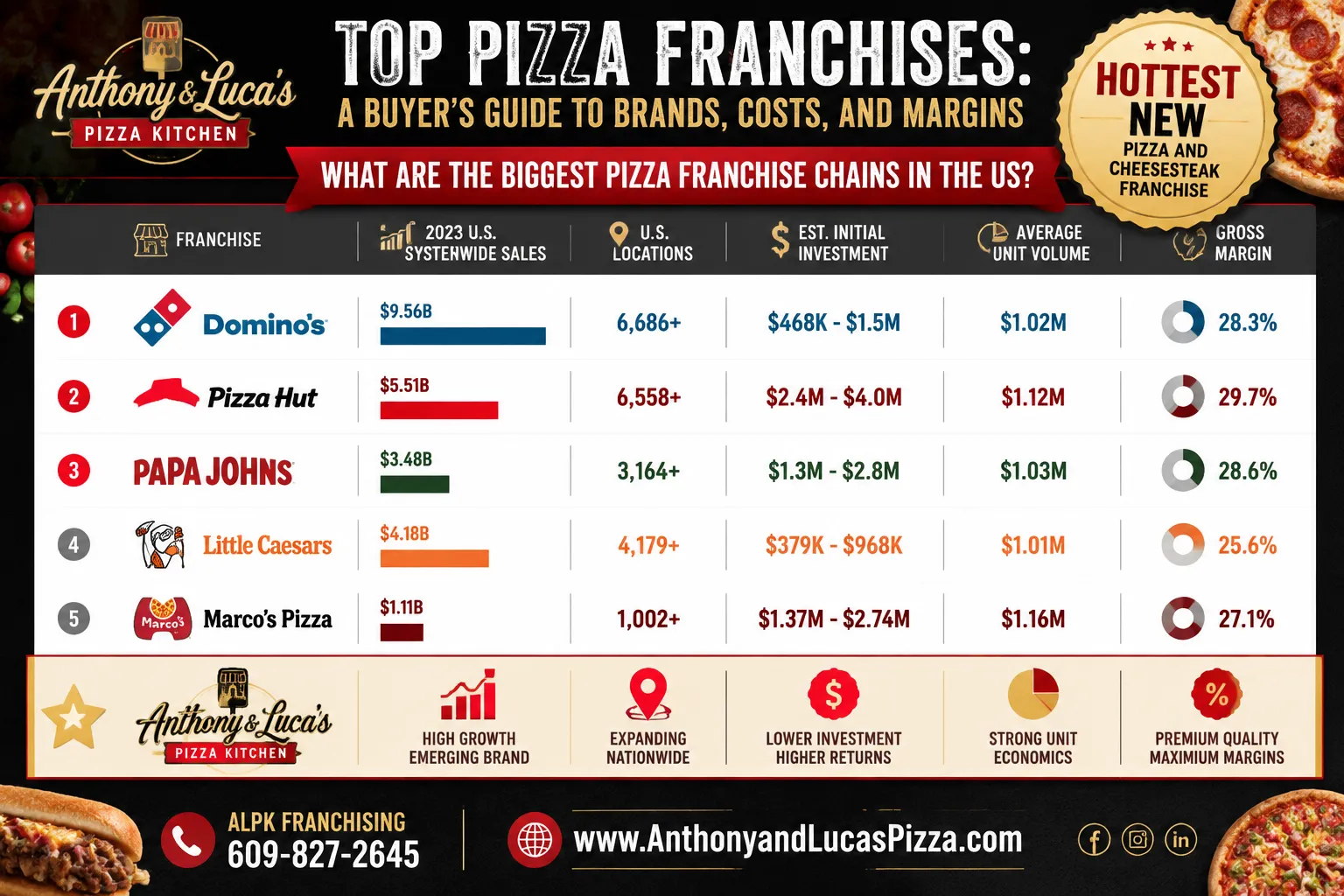
What’s the difference between Domino’s, Pizza Hut, and Papa Johns?
The core difference is business model, not just recipe. Domino’s is built as a delivery and carryout logistics company with a technology-first ordering platform. Pizza Hut carries the largest legacy of dine-in and casual-dining locations, though its newer units skew toward delivery and carryout. Papa Johns positions on ingredient quality and a premium-leaning brand promise.
| Brand | Primary model | Positioning | Operator implication |
|---|---|---|---|
| Domino’s | Delivery + carryout | Speed, technology, ordering app | Highest volume systems; strict operational standards; delivery driver management is core |
| Pizza Hut | Mixed dine-in, delivery, express | Broadest legacy brand, wide menu | Older asset base; format varies a lot by unit; remodel obligations possible |
| Papa Johns | Delivery + carryout | Ingredient-quality message | Mid-to-high investment; strong national ad support |
| Little Caesars | Carryout-first | Value and speed | Lowest labor and footprint among the big four |
Practical decision rule: choose Domino’s or Papa Johns if you want a delivery-driven, tech-heavy operation and can meet multi-unit development requirements. Choose Pizza Hut if you’re acquiring existing units in an established market. Choose Little Caesars or a small-footprint hybrid concept if capital efficiency is your priority.
Should pizza franchises deliver, or stick to pickup only?
Delivery grows revenue but compresses margin; pickup-only protects margin but caps volume. The strongest current model for small operators is carryout plus third-party delivery, with in-house delivery added only when order density justifies it.
Pickup and carryout only
- Pros: no driver payroll, no vehicle insurance exposure, no delivery liability, tighter labor model, better food quality at the moment of eating.
- Cons: smaller trade radius, harder to grow ticket count on bad-weather days, loses convenience-first customers.
Third-party delivery (DoorDash, Uber Eats, Grubhub)
- Pros: instant reach, no fixed labor cost, marketplace discovery from customers who’ve never heard of you.
- Cons: commissions commonly run in the 15-30% range depending on the plan and market, which can erase the profit on a discounted order.
In-house delivery
- Pros: you own the customer data, control the experience, and avoid marketplace commissions.
- Cons: driver recruitment, insurance, and scheduling are real operational work. It only pencils out above a certain order volume per hour.
Edge case worth planning for: a store in a dense apartment corridor may hit in-house delivery viability in month three, while a suburban strip-center store may never justify it. Model both. And this is exactly why a royalty on the net of third-party orders matters, if you pay full royalty on the gross of a DoorDash ticket, you’re paying twice on the same commission.
Are pizza franchises profitable?
Yes, pizza franchises are among the more profitable quick-service categories, primarily because dough, sauce, and cheese have a favorable cost structure relative to menu price. But profitability at the store level depends on four controllables, and a weak result in any one of them can wipe out a good result in the other three.
The four levers:
- Food cost. Well-run pizza operations target food cost in the high-20s to low-30s as a percentage of sales. Protein-heavy items like ribeye cheesesteaks run higher, so pricing and portion discipline matter.
- Labor. Small-footprint stores with a tight menu can run leaner crews. Every extra station you add is another body on the schedule.
- Occupancy. Rent above roughly 8-10% of projected sales is a structural problem you cannot fix with better operations.
- Channel mix. Every point of sales that shifts from carryout to third-party delivery costs you margin. Track it weekly.
A quick illustrative example (assumptions, not a guarantee): a store doing $1.2 million in annual sales with 30% food cost, 25% labor, 8% occupancy, 9% total franchise fees, and 10% other operating expenses would leave roughly 18% before debt service and owner compensation. Change rent to 14% of sales and that same store’s profit picture changes dramatically. Always build your own model from the franchisor’s Item 19 financial performance representation and your actual lease terms.
How do I start my own pizza franchise?
Starting a pizza franchise follows a predictable eight-step sequence, and the whole process typically takes six to twelve months from first inquiry to opening day. Rushing steps two and three is where most first-timers create problems they’ll live with for a decade.
The launch checklist:
- Define your capital. Know your liquid cash and your net worth before you talk to anyone. Most franchisors publish minimums.
- Request and read the Franchise Disclosure Document (FDD). Focus on Item 7 (estimated initial investment), Item 19 (financial performance), and Item 20 (unit turnover and closures). Federal rules require you receive it at least 14 days before signing (U.S. Federal Trade Commission, Franchise Rule).
- Call existing franchisees. Item 20 lists them. Call ten, including at least two who left the system. Ask about support quality, food cost, and whether they’d sign again.
- Secure financing. SBA 7(a) loans are the most common route for franchise restaurants; many brands appear on the SBA Franchise Directory, which streamlines eligibility review.
- Choose your territory and site. Traffic counts, daytime population, evening residential density, parking, and co-tenants. A strong franchisor helps here.
- Negotiate the lease with professional help. Get a tenant rep broker and a restaurant attorney. Never sign a personal guarantee you haven’t fully modeled.
- Complete training and hire early. Recruit your general manager before build-out finishes so they can train during construction.
- Pre-open marketing. Google Business Profile claimed and optimized, local SEO in place, paid search live, social content running, and a first-week promotion designed to drive trial.
If you want a concrete comparison point while you build your shortlist, review how a small-footprint hybrid model structures its offer at Anthony & Luca’s pizza kitchen franchise, including franchise support, social media marketing, and local Google SEO and Google Ads management handled at the system level rather than left to each owner.
What are the most common mistakes when opening a pizza franchise?
The most common mistakes are signing the wrong lease, underestimating working capital, and hiring management too late. Each one is fixable before you commit and nearly impossible to fix afterward.
- Overpaying for square footage you don’t need. A 2,400-square-foot dine-in space triples your rent and build-out versus a 900-square-foot carryout unit that can do similar volume. Footprint is the single biggest cost decision you’ll make.
- Ignoring the delivery commission math. Operators routinely discover that a third of their orders produce almost none of their profit. Price third-party menus differently from in-store menus where the platform permits it.
- Treating marketing as optional after opening. The first 90 days set your customer base. Local search visibility, review generation, and consistent social content compound; a one-week grand opening does not.
- Skipping franchisee reference calls. Ten phone calls cost you two hours and can save you $400,000.
- Cutting food quality to protect food cost. In pizza and cheesesteaks, product quality is the moat. Thinning the ribeye or swapping the bread saves pennies and loses repeat customers.
- Assuming you’ll be absent. Semi-absentee ownership in food service almost always underperforms owner-operated units in year one.
Which pizza franchises work best for small towns?
Pizza franchises with small footprints, low investment, and broad family appeal work best in small towns. A carryout or hybrid concept in a 900- to 1,400-square-foot space can serve a town of 8,000-20,000 people profitably, while a large fast-casual build-out usually cannot.
What to look for in a rural or small-market franchise:
- Low breakeven volume. Ask the franchisor what monthly sales figure covers a typical store’s fixed costs.
- Menu breadth without complexity. Pizza plus sandwiches plus a few fried appetizers covers lunch, dinner, family night, and takeout without a big kitchen.
- Catering and team-order capability. Sports teams, churches, and school events are disproportionately valuable in small markets.
- No dependence on dense delivery routes. In-house delivery is often impractical when your trade area is 12 miles wide.
Decision rule: if your town has fewer than 15,000 residents in the trade area, prioritize a concept whose average unit volume is achievable at 60% of the system average, and confirm the franchisor has comparable rural units you can call.
Pizza franchise vs. independent pizzeria: which is better?
A franchise is better if you value proven systems, supply chain pricing, and marketing infrastructure. An independent pizzeria is better if you want full creative control, no ongoing royalty, and the freedom to change your menu and pricing at will. Most first-time restaurant owners do better with a franchise; experienced operators with a strong local following often do better independently.
| Factor | Pizza franchise | Independent pizzeria |
|---|---|---|
| Ongoing fees | Royalty + marketing fund | None |
| Brand recognition | Immediate | Built over years |
| Supply chain pricing | Negotiated system-wide | Your own vendor deals |
| Recipe control | Limited | Total |
| Marketing support | Provided (SEO, ads, social) | Entirely yours to run |
| Financing | Easier with SBA-listed brands | Harder without track record |
| Resale value | Often higher, brand transfers | Depends on your local goodwill |
Edge case: if you already run a successful independent pizzeria and want to expand, converting to a franchise system can give you purchasing power and marketing infrastructure you can’t build alone. Some franchisors offer conversion programs specifically for this.
Which pizza franchise brands are growing fastest, and who offers gluten-free?
The fastest-growing pizza franchise brands are typically mid-sized regionals expanding into new states, not the mature national chains, because percentage growth is easier from a smaller base. Marco’s Pizza has been among the more aggressive U.S. expanders in recent years, and small-footprint hybrid concepts are gaining ground because their lower entry cost widens the pool of qualified franchisees.
On gluten-free: most major pizza chains, including Domino’s and Papa Johns, offer a gluten-free crust option, but nearly all state that they cannot guarantee a gluten-free environment because shared prep surfaces and shared ovens create cross-contamination risk. That distinction is legally and medically important.
If gluten-free is a meaningful part of your local demand:
- Ask the franchisor whether the gluten-free crust arrives pre-made and sealed (which reduces handling risk).
- Confirm whether the operations manual requires dedicated utensils, gloves, and a separate prep zone.
- Train staff on the difference between “gluten-free ingredients” and “safe for celiac disease.” Overpromising here is a real liability.
- Consider gluten-free as an add-on revenue item rather than a positioning strategy unless your brand is purpose-built for it.
FAQ
How much can a pizza franchise owner make per year?
Owner earnings depend on sales volume, cost structure, debt service, and whether you work in the store. Rather than trusting a general figure, build a projection from the franchisor’s Item 19 disclosure in the FDD and your actual lease and loan terms.
What is a typical pizza franchise royalty fee?
Most pizza franchises charge 4-6% of gross sales as royalty, plus a marketing fund contribution of roughly 1-4%. A 5% gross royalty is competitive. Anthony & Luca’s charges 5% on gross and 5% on net for third-party delivery orders, which limits margin loss on commission-heavy platforms.
Can I open a pizza franchise with no restaurant experience?
Yes. Many franchisors prefer business acumen and capital over prior restaurant experience, and provide operational training. You will still need a strong general manager and a willingness to be in the store daily during the first year.
Do I need a large space to run a profitable pizza franchise?
No. Small-footprint concepts can generate high sales per square foot. Anthony & Luca’s reports average store volume above $1.2 million from under 1,000 square feet, which illustrates that footprint and revenue are not tightly linked.
What makes an authentic Philly cheesesteak franchise different from a generic sandwich shop?
Authenticity comes down to four things: real Philly bread, sharp cheese (Cooper Sharp is the traditional choice), fried onions, and properly sliced ribeye in a generous portion. Anthony & Luca’s builds its stock sandwich the authentic Philadelphia way with over 8 ounces of USDA ribeye.
Is pizza or cheesesteak a better franchise category?
Pizza generally has lower food cost; cheesesteaks generally command a higher ticket. A hybrid concept that sells both can smooth daypart demand and lift average check, which is why pizza-plus-sandwich models have gained attention among franchise buyers.
How long does it take to open a pizza franchise?
Six to twelve months is typical from signed agreement to opening, driven mostly by site selection, lease negotiation, permitting, and build-out. Conversion spaces with existing kitchen infrastructure open fastest.
What is Item 19 in a Franchise Disclosure Document?
Item 19 is the section where a franchisor may disclose financial performance representations, such as average unit sales. Franchisors are not required to include it, so an FDD with a detailed Item 19 signals more transparency.
Should I sign a single-unit or multi-unit agreement?
Start with a single unit unless you have prior multi-unit operating experience and the capital to open two or three without straining cash flow. Multi-unit commitments often come with development schedules that carry penalties if you fall behind.
Conclusion
The top pizza franchises are not a fixed ranking; they’re a matrix of trade-offs between brand strength, capital required, and margin per square foot. The national giants give you recognition and a proven playbook at a higher cost of entry. The smaller high-margin concepts give you a better sales-to-investment ratio if the food is genuinely good enough to build repeat traffic without a national ad budget.
Your next four steps:
- Write down your real numbers. Liquid capital, net worth, and how many hours a week you’ll personally work in the store.
- Request FDDs from three brands across different tiers, one national, one regional, one small-footprint hybrid, and compare Item 7, Item 19, and Item 20 side by side.
- Call at least ten existing franchisees, including former ones, and ask specifically about food cost, support responsiveness, and third-party delivery margin.
- Model your worst case, not your best case. Build a projection at 60% of the system average unit volume. If the store still survives, the deal is sound.
If capital efficiency, strong margins, and food people talk about are your priorities, explore what the best pizza franchise opportunity looks like when authentic NY and Jersey boardwalk thin-crust pizza, a real Philly cheesesteak program, and genuine Italian street food run out of a footprint under 1,000 square feet with a 5% gross royalty. That combination, low entry cost, high revenue density, and menu items with real pull, is what separates a business you own from a job you bought.
Sources
- U.S. Federal Trade Commission, “Franchise Rule” and Buying a Franchise guidance, https://www.ftc.gov/business-guidance/industry/franchises
- U.S. Small Business Administration, SBA Franchise Directory, https://www.sba.gov/document/support-sba-franchise-directory
- Anthony & Luca’s Pizza Kitchen, Franchise Information, 2026, https://www.anthonyandlucaspizza.com/pizza-kitchen-franchise/